Various organs make up systems, and every system performs crucial roles. Ranking them in order of importance is almost impossible, as the failure of one system adversely affects others. The immune system is undoubtedly integral for human survival because it is important for the following reasons:
- Surveillance – To ensure nothing unwarranted (that could cause harm) is in the body
- Defense – Capable of attacking foreign invaders that can cause the body harm
- Memory – Equipped to remember anything that once caused the body harm and instantly defend the body against such in the future
- Homeostasis – It cleans up the body by clearing out bad/dead cells and many other things that qualify as debris
However, this system is not faultless, which is why cancer and tumors may gain a foothold. Although very strong, it has certain proteins that you can liken to handbrakes in a vehicle. They reduce its fighting capacity by reducing its signals.
This is actually for the worthy cause of ensuring that the system does not overreact and cause autoimmune damage, such as CNS inflammation. You can click here if you would like to find out about CNS inflammation.
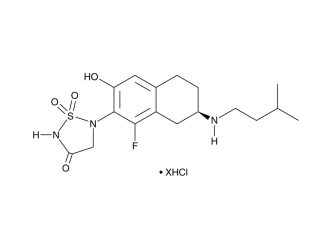
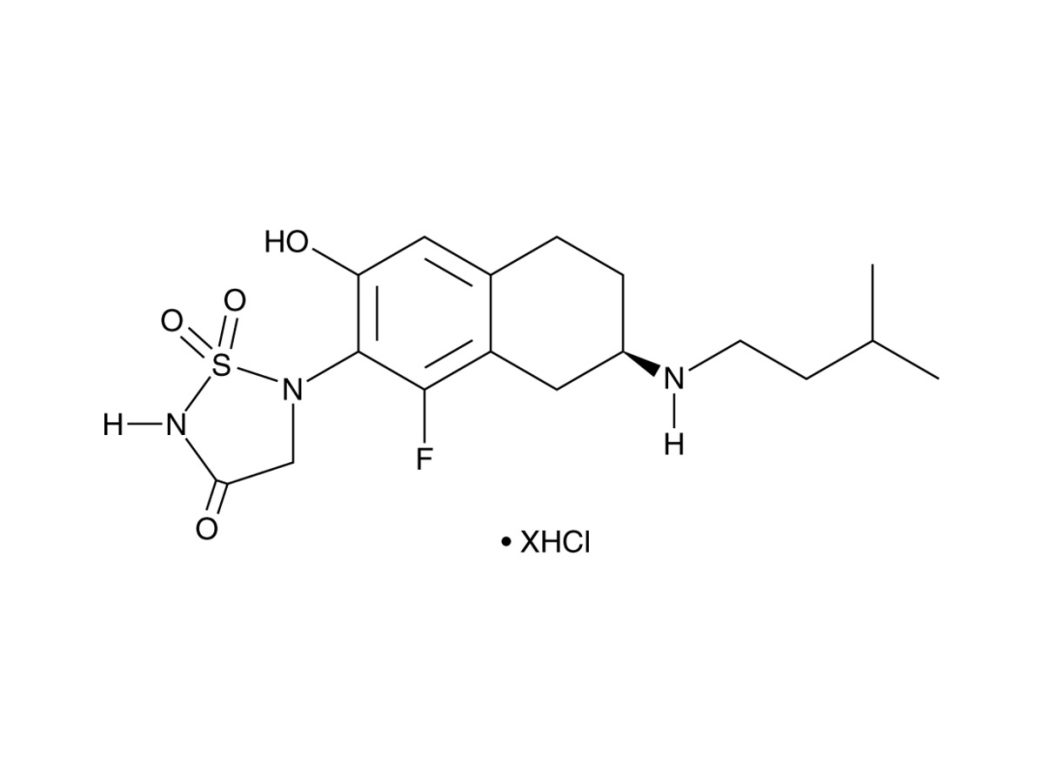
Cancers and tumors in general can happen because the activities of these built-in proteins (PTPN1 and PTPN2) restrict the immune system’s actions. Ongoing research suggests that Osunprotafib (ABBV-CLS-484) may inhibit these built-in proteins, preventing them from limiting the immune system’s fighting chance against cancer and tumors. Read on to find out more.
How Osunprotafib (ABBV-CLS-484) Works
Osunprotafib (ABBV-CLS-484) works as an inhibitor. It curtails the activities of both the PTPN1 and PTPN2 in-built proteins. It focuses more on the T Cells, otherwise known as T lymphocytes.
Although T lymphocytes are not the only kind of immune support cells, they are one of the major ones, as they do a lot for defending the body. They are also one of those likely to overreact and cause autoimmune consequences. This is why the PTPN1/2 in-built proteins greatly restrict their signals.
When cancers and tumors occur, signal dampening reduces the T Cells and other immune support cells’ fighting chance. As a result, the idea of Osunprotafib (ABBV-CLS-484) is to boost the signals.
For starters, this action intends to activate the T Cells better for defense against these abnormal developments. However, this is not the only reason it can increase the chances of dealing with cancers and tumors. An increase in these signals also creates an enabling environment for their proliferation.
As a result, T lymphocytes get better at identifying, attacking, and defeating cancers and tumors. By the way, research involving Osunprotafib (ABBV-CLS-484) also aims to boost these signals for a long while.
So, it is equally about ensuring enough time to get the job done. In summary, ongoing studies reveal how the Osunprotafib (ABBV-CLS-484) PTPN2/PTPN1 Inhibitor can boost TCR (T Cell Receptor) signaling. This would then enhance the functioning of T lymphocytes, increasing immune support against the continued growth and development of cancers and tumors, at large.
Inhibiting the PTPN 1/2 in-built proteins is a major way it offers anti-tumor immunity, but it is not the only way. This is because the drug also aims to directly alter the growth and development of cancer/tumor cells themselves. It aims to ensure the growth process weakens the cancer/tumor’s effects and increases the likelihood of these cells dying.
Does Osunprotafib (ABBV-CLS-484) Work for Anti-Tumor Immunity?
Research suggests Osunprotafib (ABBV-CLS-484) enhances anti-tumor immunity in animal models used for this experiment. However, researchers cannot completely say this about human models, as studies are still ongoing. Understanding the scope of its success as of this moment is very important. This is because of the distinctions between animals and humans. Some of the distinctions include:
Difference in Immune Systems
All animals have an immune system. However, this does not mean that clinical success with one animal would translate to clinical success in others. One clear reason for this is the difference in complexity between the immune systems of various animals.
In testing the validity of Osunprotafib (ABBV-CLS-484) for anti-tumor immunity, researchers achieved successful outcomes using mice. However, differences in immune response are just some of the several ways the immune system of mice differs from humans. This is especially true in areas such as the subset balance of T lymphocytes and cytokine production.
By the way, some of these experiments use genetically engineered animals, which may be the case here. This further shows how successful outcomes with mice do not guarantee success with humans.
Tumor Microenvironment
The nature of tumors in animals differs from their nature in humans. This is one reason there is no guarantee that Osunprotafib (ABBV-CLS-484) offers anti-tumor immunity in humans, simply because it worked in mice used for this preclinical trial.
For instance, tumor cells are homogeneous and fast-growing in mice, but they are not in humans. Rather, they are heterogeneous and slow-growing in humans.
So, this genetic difference means a lot, and it is why what works for mice is not guaranteed to work for humans. Overall, tumors in humans are more complicated, and although preclinical trials with animals like mice are a great place to start, nothing is certain until researches on humans are concluded.
PTPN 1/2 Operations
The in-built proteins (PTPN 1/2) perform key roles in cell growth and signaling. However, their operations are not the same in various animals. This is also evident in how they respond to things like IFN-γ and even insulin signaling.
The same can be said about how they respond to drugs, including experimental drugs like Osunprotafib (ABBV-CLS-484). As a result of these differences in PTPN 1/2 Operations, the successful outcome of using Osunprotafib (ABBV-CLS-484) for anti-tumor immunity does not guarantee success with human models.
Genetic Diversity
Humans are more genetically diverse than the animal models researchers usually use for these preclinical trials. This is besides the fact that most animal models are laboratory animals. The fact that humans are very genetically diverse also suggests that success with some humans may not translate to success with other human patients.
Safety Concerns
These in-built proteins (PTPN 1/2) exist for a reason. They ensure the immune system, which should defend the body, does not become its nightmare. This is because an overly active immune system can cause CNS inflammation, leading to several complications, among other negative effects.
So, while Osunprotafib (ABBV-CLS-484) may release the handbrakes these proteins initially set, what about the adverse effects of an overly active immune system? These could be serious consequences, such as:
- Graft Rejection – For those who require an organ transplant
- Allergies/Hypersensitivity
- Organ Failure/Damage
- Tissue Destruction
Frankly, the list goes on as there are several other negative possibilities. This is all to say that the chances for Osunprotafib (ABBV-CLS-484) to safely guarantee anti-tumor immunity in humans are not certain at this point.
Conclusion
Although Osunprotafib (ABBV-CLS-484) has delivered successful outcomes for anti-tumor immunity in mice, researchers cannot say the same for humans. However, room for optimism exists as research remains inconclusive and shows some promise. The success with animal models is also a huge step in the right direction.