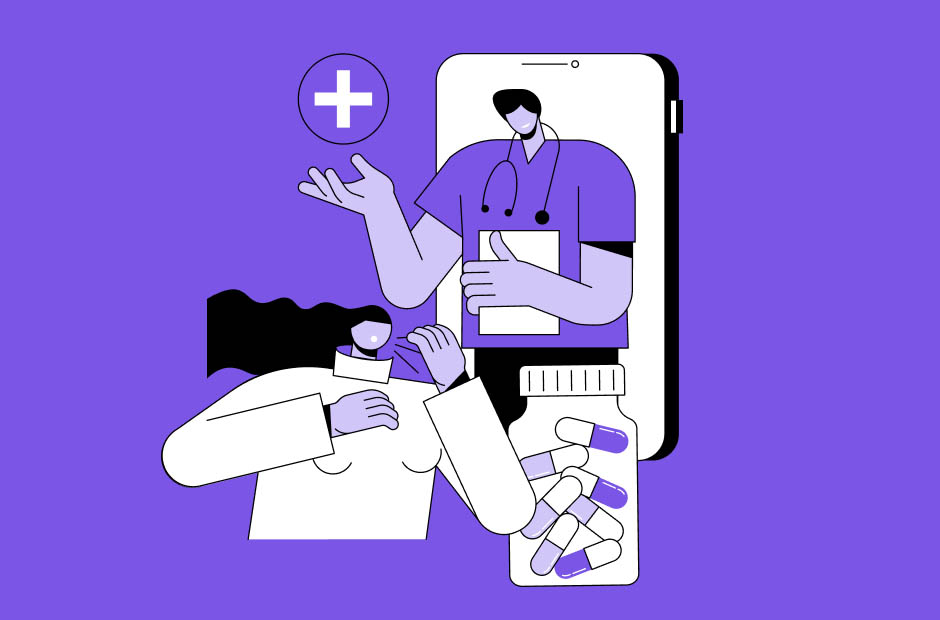
The digital mental health market reached $3.2 billion in 2024 and continues accelerating toward $5.8 billion by 2028, representing a 15.7 percent compound annual growth rate. Healthcare organizations increasingly recognize that mental wellness apps address critical gaps in patient care delivery and accessibility.
Telehealth adoption jumped 68 percent between 2023 and 2024, with mental health services leading this expansion. Sustained momentum reflects genuine demand from patients and healthcare providers seeking scalable solutions.
Founders aiming to build an AI-powered mental health app must navigate regulatory compliance, which remains the greatest market entry barrier. Developers need to address HIPAA requirements, state-specific regulations, FDA oversight, and evolving data protection laws.
In 2026, enterprise buyers increasingly demand AI-ready compliance frameworks and demonstrated security maturity before contract negotiation. This shift makes regulatory planning non-negotiable from day one.
Understanding HIPAA Requirements for Mental Wellness Apps
HIPAA governs how applications handle Protected Health Information (PHI). Covered entities including healthcare providers, health plans, and healthcare clearinghouses must comply with HIPAA regulations. Business associates who process PHI must also meet these standards.
Mental wellness applications fall into several compliance categories. If your application collects patient names, mental health diagnoses, medication lists, or any identifiable health data, you handle PHI and must implement HIPAA-compliant infrastructure.
The HIPAA Security Rule requires three core safeguards: administrative, physical, and technical controls. Administrative safeguards include workforce security, security awareness training, and authorization protocols.
Physical safeguards address facility access controls and workstation management. Technical safeguards demand encryption, access controls, and audit logging capabilities.
Your application must encrypt data both in transit and at rest using industry-standard protocols. The audit trail must show who accessed patient records and when.
The breach notification rule requires notification within 60 days if you experience a data breach affecting more than 500 residents. Non-compliance results in civil penalties ranging from $100 to $50,000 per violation.
FDA Oversight and Medical Software Classification
The FDA classifies digital mental health tools based on intended use. If your application diagnoses conditions, predicts patient deterioration, or recommends treatment modifications, it qualifies as medical software requiring FDA clearance or approval.
Class II devices require 510(k) premarket notification. Class III devices demand Premarket Approval, involving clinical data submission and FDA review lasting 18 months or longer.
When you build an AI-powered mental health app, you must understand how FDA views your specific feature set. Apps providing wellness support without medical claims often avoid FDA jurisdiction, but the boundary remains nuanced.
Consulting with regulatory affairs specialists before development prevents costly misalignment with agency expectations.
Data Security Considerations Beyond Compliance Checklists
HIPAA compliance forms your regulatory foundation, but robust data security extends beyond minimum requirements. Mature organizations implement security measures exceeding compliance thresholds to protect patient information effectively.
When building AI-powered mental health applications, machine learning models trained on patient data present unique privacy risks. A common failure point occurs when developers train AI models on production patient data without proper anonymization, creating scenarios where patient records become recoverable through model inversion attacks.
Differential privacy techniques, federated learning, and synthetic data generation help protect patient information while enabling valuable AI development.
Cloud infrastructure selection significantly impacts your security posture. Healthcare-focused cloud providers like Amazon Web Services with HIPAA-eligible services, Microsoft Azure Government, and Google Cloud Healthcare API offer built-in compliance controls.
Employee access management requires strict protocols. Limit data access to team members with legitimate business needs and implement role-based access controls.
Key Features Patients and Healthcare Providers Expect
Mental health app success requires understanding what patients and providers actually need. User expectations have shifted significantly as digital health matured between 2024 and 2026.
Patients expect seamless integration with existing healthcare providers. They want mental health data shared with primary care physicians, therapists, and psychiatrists. Health systems prioritize apps with interoperability capabilities, making robust API development and secure data exchange essential.
Clinical features supporting assessment, treatment planning, and progress tracking create provider value. Apps enabling standardized outcome measurements help clinicians monitor improvement. Providers choosing mental health apps prioritize those demonstrating measurable outcomes—this directly correlates with contract renewals and expansion revenue.
Notification systems sending appointment reminders, medication alerts, and crisis support resources increase engagement. However, notifications must respect user preferences and avoid alert fatigue.
Accessibility features ensure all users can access mental health support. Developers must implement screen reader compatibility, keyboard navigation, and high-contrast interface options.
3 Reliable US Tech Companies for HIPAA-Compliant Mental Wellness App Development in 2026
1. GeekyAnts
GeekyAnts is a global technology consulting firm specializing in end-to-end healthcare app development, digital transformation, digital product design, and custom software solutions. The company has guided healthcare organizations through complex digital initiatives with expertise in HIPAA-compliant application development and healthcare app development.
GeekyAnts delivers healthcare software spanning telemedicine platforms, patient management systems, and clinical decision support tools. The engagement model focuses on early-stage companies and scales teams according to project requirements.
Clutch Rating: 4.9/5 (111+ verified reviews)
Address: GeekyAnts Inc, 315 Montgomery Street, 9th & 10th Floors, San Francisco, CA 94104, USA
Phone: +1 845 534 6825, Email: info@geekyants.com, Website: www.geekyants.com/en-us
2. Sidebench
Sidebench has delivered healthcare software solutions since 2015, combining strategic product design with technical expertise. The company specializes in HIPAA-compliant mobile apps, telemedicine platforms, and enterprise health system integrations.
Sidebench works with healthcare startups and established organizations. Their team integrates user research, clinical insight, and security architecture to transform healthcare workflows into intuitive digital solutions.
Clutch Rating: 4.8/5 (47 verified reviews)
Address: 2912 Colorado Avenue, Santa Monica, CA 90405, USA, Phone: +1 310 917 0995
3. Calder Solutions
Calder Solutions provides custom healthcare software development, UI/UX design, and business consulting for healthcare applications. The company specializes in mental health app development, healthcare data solutions, and compliance-focused software architecture.
Calder serves healthcare startups and established enterprises. Their process ensures transparent delivery with bi-weekly demos and continuous stakeholder alignment throughout development cycles.
Clutch Rating: 4.8/5 (13 verified reviews)
Address: 3110 W. Maple Road, Ada, MI 49301, USA, Phone: +1 616 622 3000
Selecting the Right Development Partner
Your technology partner significantly influences project outcomes when building healthcare app solutions. Evaluate potential partners based on healthcare experience, compliance expertise, and team capabilities.
Ask candidates about specific HIPAA implementations they have completed. Request references from mental health organizations they have served.
Cost should not drive your selection decision. Choosing partners based on lowest bids often results in expensive rework when compliance issues emerge during later development stages.
Consider long-term partnership potential. Healthcare products evolve continuously as regulations change. Selecting a partner who grows with your organization proves more valuable than optimizing for initial cost.
Final Thoughts
Mental wellness app development in 2026 demands simultaneous attention to regulatory compliance, clinical efficacy, and user experience. Founders who understand HIPAA requirements from the outset develop products faster and more cost-effectively than those treating compliance as an afterthought.
When you develop healthcare app solutions, your choice of technology partner shapes your entire compliance journey. Experienced partners embed regulatory requirements into development processes, preventing costly pivots and delays.
Market demand for mental health digital solutions continues accelerating. Organizations that navigate the regulatory landscape strategically position themselves to capture this opportunity.
Before raising capital or starting development, validate three non-negotiables: your specific regulatory pathway (FDA Class I, II, or exempt), your target buyer’s compliance requirements, and your ability to maintain clinically meaningful data sharing with existing healthcare systems.
Founders who address these realities upfront avoid costly mistakes that delay market entry by 6–18 months.