Traveling along the Sorrento Coast means accepting that time moves differently here. It is not simply a matter of visiting well-known villages or photographing the gulf from its most famous viewpoints. In this part of southern Italy, the journey often begins at the table. Food sets the pace of the day, shapes encounters, and, quite often, determines the road taken afterward.
A gastronomic tour through Sorrento does not follow a fixed itinerary. It may begin in a café where coffee is taken standing at the counter, continue in a market where produce arrives straight from the countryside, and end in a trattoria that has been open for more years than the owner himself can easily remember. Little by little, the visitor comes to understand that the culinary tradition of the peninsula was never designed to be displayed, but to be lived.
Lemons, orchards, and terraces overlooking the sea
The first contact with Sorrentine gastronomy usually comes through the lemon. It does not appear as a decorative detail, but as a constant presence. It can be found in desserts, in liqueurs, in certain savory dishes, and even in the scent that lingers in the air while walking through the cultivated terraces that surround Sorrento.
On many family-run estates, work is still carried out by hand. The lemon trees grow beneath wooden structures that protect the fruit from wind and harsh sunlight. During visits, producers explain how the fruit is harvested, preserved, and transformed into products that belong to everyday life, such as artisan limoncello or homemade marmalades.
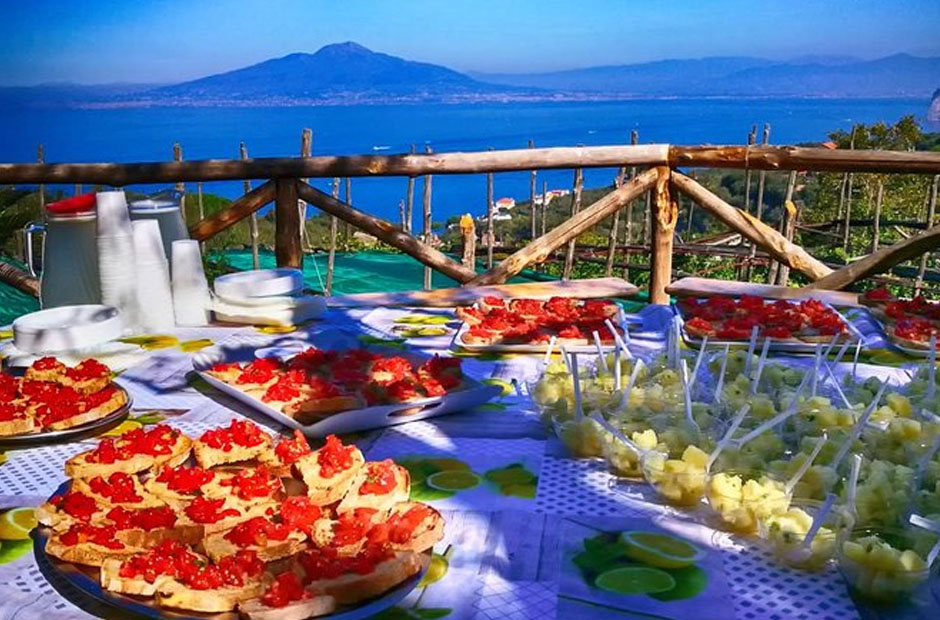
The route tends to be calm, unhurried, with simple tastings enjoyed outdoors, facing the sea or the hills.
Markets where real cooking begins
To understand the culinary tradition of the Sorrento Coast, it helps to pass through the local markets. There, one sees what is truly bought every day: freshly landed fish, seasonal vegetables, bread baked that same morning, and cheeses that vary from one area to another.
These markets are not arranged for visitors, and that is precisely why they are so interesting. The conversations between vendors, the products displayed without decoration, the flexible hours—everything conveys the sense that cooking here is still tied to routine rather than spectacle.
Those following a food itinerary often combine these visits with stops at small pasta workshops or old bakeries. In such places, it becomes clear that production remains limited and that many recipes have been repeated for generations.
During this kind of journey, some travelers prefer to stay in smaller places, away from the constant movement of the town center. Among the options that frequently appear in local recommendations is Eden House Sorrento, chosen by those seeking a quiet atmosphere from which to explore the peninsula without depending on organized routes.
Hidden trattorias and recipes that do not change
The most interesting part of a gastronomic journey in Sorrento usually arrives as evening falls. The streets gradually empty, and the more familiar restaurants begin to fill. There are no extensive menus or elaborate presentations. The dishes are few, and they change according to what is available that day.
Gnocchi alla sorrentina, oven-baked fish with herbs, vegetables cooked with local olive oil, and sweets prepared for festive occasions all belong to a repertoire that survives because local people still eat it. Quite often, it is the owner himself who explains where the recipe came from or who first taught it to him.
In those conversations, another way of understanding travel begins to emerge. Food ceases to be something merely tasted and becomes something shared.
When the route moves away from the coast
If the itinerary continues inland, the cuisine of Campania begins to shift little by little. The dishes become heartier, mountain products appear, and different wines enter the scene. The landscape shapes the table in an unmistakable way.
In small villages, one finds preparations that hardly appear in guidebooks: soups made with bread and vegetables, meats cooked slowly over time, and sweets tied to local celebrations. Each stop adds something different to the journey, as though the trip were writing itself along the way.
In the end, a gastronomic tour along the Sorrento Coast does not truly end when the trip is over. There is always the impression that one more restaurant remains to be discovered, that there is a recipe someone mentions while saying goodbye, or a market that opens only on certain days. And that feeling, more than any single dish, is what usually stays in the memory.