Key Takeaways
- AI technologies enable modern broadcasters to create, edit, and distribute content faster and more efficiently.
- Automated journalism and virtual news anchors make news delivery continuous, multilingual, and cost-effective.
- Advanced analytics powered by AI deepen audience engagement and enhance personalized viewing experiences.
- Ethical and regulatory questions are central to the wider adoption of AI in media broadcasting.
Artificial intelligence is reshaping how news and entertainment reach audiences, introducing remarkable efficiencies and capabilities across the media landscape. AI-driven tools now play a central role in making workflows smarter, faster, and more adaptive to ever-changing demands. With cutting-edge technologies such as virtual anchors and automated reporting, broadcasters can deliver content tailored to global and local audiences alike. The impact of dubbing AI extends beyond simple language localization, streamlining production and making content accessible worldwide in real time.
As these innovative solutions reshape broadcasting, media organizations are redefining what’s possible, automating editing, creation, and distribution processes. Early adopters are discovering both new opportunities for creative engagement and challenges surrounding the responsible use of AI. The drive for greater personalization and immediacy is accelerating AI adoption, yet industry leaders need to maintain trust, transparency, and ethics as they navigate this transformation. Explore the advancements and challenges broadcasters face as they embrace these dynamic changes.
AI in Content Creation and Editing
AI is driving major improvements in how content is conceived, crafted, and finalized for air. Whether it’s generating scripts, editing video, or creating immersive digital experiences, broadcasters are leveraging AI platforms for faster, higher-quality output. Tools like Pictory and Synthesia allow for seamless blending of visuals, audio, and captions, automating time-consuming editing and subtitling tasks. Broadcasters can create compelling digital packages for multiple channels with just a few clicks, significantly reducing post-production bottlenecks.
In addition, enhanced audio solutions (such as those from ElevenLabs) are empowering producers with realistic, natural-sounding voices that can be adapted for any language. This increase in multilingual production capability is setting a new standard for global media reach, appealing to broader and more diverse audiences.
By streamlining workflows, AI enables smaller teams to manage more complex productions, democratizing access to high-quality broadcast content creation. Major publications like The New York Times have reported on the rapidly shifting landscape in which AI tools reduce costs while boosting delivery speed across newsrooms.
Automated Journalism and Virtual News Anchors
News production is undergoing a seismic shift as automated journalism tools generate reports, analyses, and even breaking news stories in real time. News organizations increasingly rely on these solutions to cover routine topics, such as financial results or sports summaries, freeing human journalists to focus on investigative or creative work. For example, the Associated Press expanded its business coverage dramatically with these tools, publishing more reports with fewer errors and quicker turnaround times.
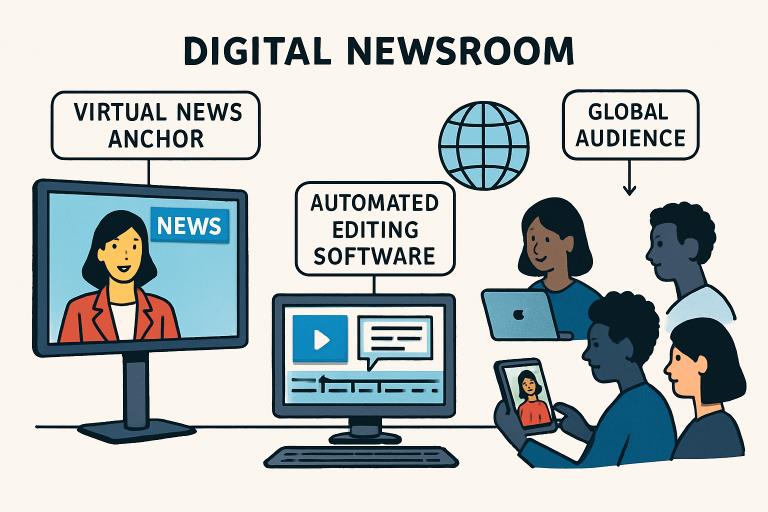
Virtual news anchors powered by AI—capable of delivering news updates around the clock in multiple languages—are now a reality. These digital personalities, powered by natural language processing and computer vision, deliver news seamlessly and can reduce reliance on traditional staffing models. However, with the proliferation of hyper-realistic avatars and deep learning-generated video, significant ethical considerations arise, especially regarding deepfake technology and biased content. This demands increased industry vigilance and fresh regulatory frameworks to protect the integrity of broadcast journalism.
AI-Driven Analytics and Audience Engagement
AI analytics are revolutionizing broadcaster-audience interactions. Powerful algorithms analyze real-time data such as viewing patterns, geographic information, and social media engagement to offer personalized recommendations and dynamically adapt programming. Broadcasters are using these insights to fine-tune content scheduling, program formats, and ad placements, boosting both retention and satisfaction. According to BBC News, some platforms now achieve over 95% accuracy in automated captioning and speech recognition, making broadcasts more accessible and inclusive.
These tools don’t just serve the broadcaster; they empower audiences to curate their own media experience. With viewer preferences guiding content delivery, engagement metrics are soaring. The drawback, however, is that over-personalization risks creating filter bubbles, a point of concern for media watchdogs and advocates of balanced journalism.
Ethical Considerations in AI Integration
The rapid adoption of AI in media broadcasting raises pressing ethical and regulatory concerns. From transparency around AI-generated stories to the potential for reinforcing biases through unchecked algorithmic decisions, the risks to journalistic integrity are multi-layered. Establishing clear accountability for content is critical—audiences must be able to distinguish between human and AI-generated media, and editorial oversight remains paramount.
Leaders across the sector are increasingly called to address questions of fairness, privacy, and accuracy. The implementation of robust ethical guidelines and transparent governance will help ensure the technology uplifts rather than undermines journalism’s foundational values.
Future Outlook
AI’s impact on media broadcasting is only beginning. Future trends point toward even more advanced content generation capabilities, predictive analytics, and individualized audience experiences, enabling richer, more interactive programming. Broadcasters will likely pursue AI-augmented storytelling formats, integrating virtual and augmented reality with automated production processes.
Striking a balance between innovation and responsibility will define the next phase of industry adaptation. As technology and best practices mature, the focus will remain on ethical stewardship, ingenuity, and audience trust—all essential to capturing the vast potential of AI-driven automation in broadcasting.