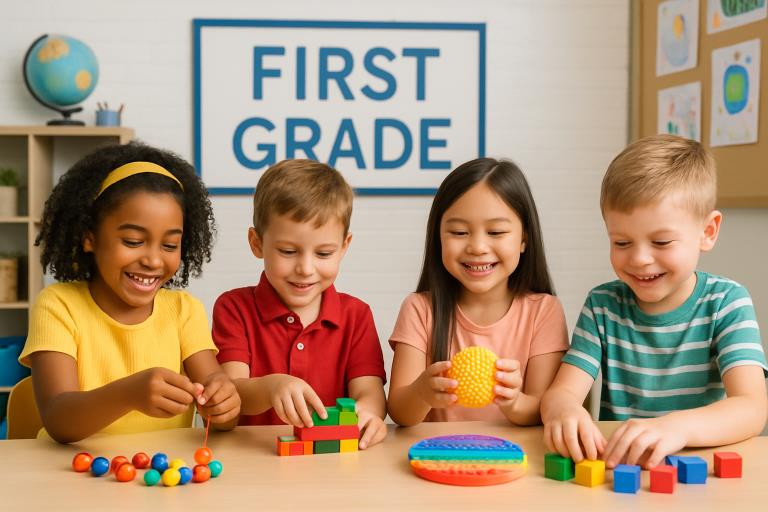
Learning in the first grade should be exciting, engaging, and memorable. Young students thrive when given opportunities to explore new concepts through interactive activities that connect to the real world. Whether you are adapting lessons for a classroom or bringing new ideas home, hands-on activities vastly improve comprehension and participation. Click here to find a wealth of first-grade lesson inspirations that bring learning to life for young students.
From stimulating their senses with mystery objects to encouraging language skills through collaborative storytelling, hands-on teaching methods help students retain more information and form positive associations with school activities. Integrating arts, play, and discovery fosters creativity and curiosity, laying a strong foundation for academic success in later years. These strategies can be tailored for classroom use or for use at home, making every learning session both productive and enjoyable.
Real-world connections in your lessons allow children to better relate to the material. By delivering content within the context of their daily lives, students are more likely to find meaning in what they are being taught, which improves recall and understanding over time. Hands-on learning is especially essential for first graders, as their fine motor skills, social development, and cognitive abilities are rapidly blossoming.
Try a range of activities that mix movement, conversation, art, and problem-solving. These lesson ideas are intentionally designed to be accessible and adaptable for a wide range of learning needs, ensuring all children can participate and feel successful in their learning journey.
Mystery Boxes
Kick off any new topic with a touch of excitement using mystery boxes. Place items associated with an upcoming lesson in a decorated box, and encourage students to explore with their hands, without peeking. They might shake, touch, or smell the box to guess what is inside. For instance, introduce a unit on farm animals by placing rubber animals or other miniature props inside. This strategy not only builds anticipation but also engages multiple senses, making the lesson memorable. For additional creative ways to capture students’ attention, explore ideas from Scholastic.
Word Building Blocks
Combine tactile play with language development by integrating word-building blocks or letter tiles into your literacy centers. Provide students with word lists, then have them construct words using individual letter pieces. This repetitive, hands-on practice enhances letter recognition, spelling, and understanding of how words are formed. As students work alone or in small groups, they develop phonics skills and confidence in their reading. If you are looking for even more lesson inspiration, the Reading Rockets project offers numerous evidence-based techniques for early literacy.
Number Bingo
Inject a sense of fun into math practice with Number Bingo. Prep bingo cards with a selection of numbers relevant to what students are learning, along with counters or markers. As you call out numbers from a shuffled stack, children mark their cards and aim to fill a row. This familiar game format encourages risk-free rehearsal of number identification and counting. Teachers can adapt the rules for skip counting, addition, or subtraction to meet various learning goals.
Alphabet Soup
Learning the alphabet and forming words becomes a hands-on adventure with Alphabet Soup. Fill a large tub or bowl with plastic letters, then let students take turns using a spoon to fish out letters. Challenge them to create short words or match uppercase and lowercase pairs, providing a multisensory approach to phonics instruction. This game can also be adapted to help with spelling new vocabulary or sight words, reinforcing foundational literacy skills.
Color Mixing Lab
Color theory moves beyond the page when students have the opportunity to mix their own colors. Provide primary colored paints, mixing trays, and brushes, and allow kids to experiment with combinations. As children mix red, blue, and yellow to discover secondary and tertiary colors, they build an understanding of art concepts and scientific observation. Incorporate relevant vocabulary into the experiment, and encourage kids to describe what they see. For more inspiration, The New York Times’ guide on fostering a love of learning is a helpful read for both teachers and parents.
Interactive Storytelling
Literacy leaps forward when students are immersed in interactive storytelling. Use props, puppets, or simple costumes, and invite children to participate in retelling or acting out stories. Encourage them to alter details, add their own dialogue, or predict what might happen next. This not only builds expressive language skills and sequencing but also boosts confidence in public speaking and collaborative participation.
DIY Storybooks
Help children become authors by guiding them through the creation of their own storybooks. Have students draft simple sentences and illustrate each page, assembling the results into a stapled booklet. Support kids in writing captions, sequencing events, and editing their stories. This project not only lays a foundation for writing skills but also encourages imagination and pride in creation.
Fraction Pizza Craft
Fraction concepts become concrete through a pizza craft project. Start with a paper plate to represent a pizza, then have students draw or glue on toppings before cutting the “pizza” into slices labeled with basic fractions like 1/2, 1/4, or 1/8. Once complete, use the slices for interactive math practice, combine pieces to make different fractions, or discuss how much of the “pizza” is missing. This approach brings an abstract math idea into the real world for better understanding.
Incorporating these hands-on activities into your first-grade teaching routine transforms ordinary lessons into engaging, joyful experiences. By encouraging movement, creativity, and active problem-solving, you help children develop essential academic and life skills. Early exposure to interactive learning ignites curiosity and builds confidence, ensuring students associate school with fun, discovery, and growth.