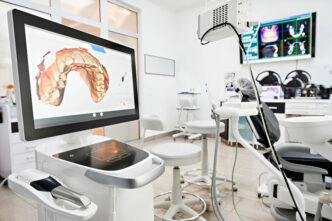
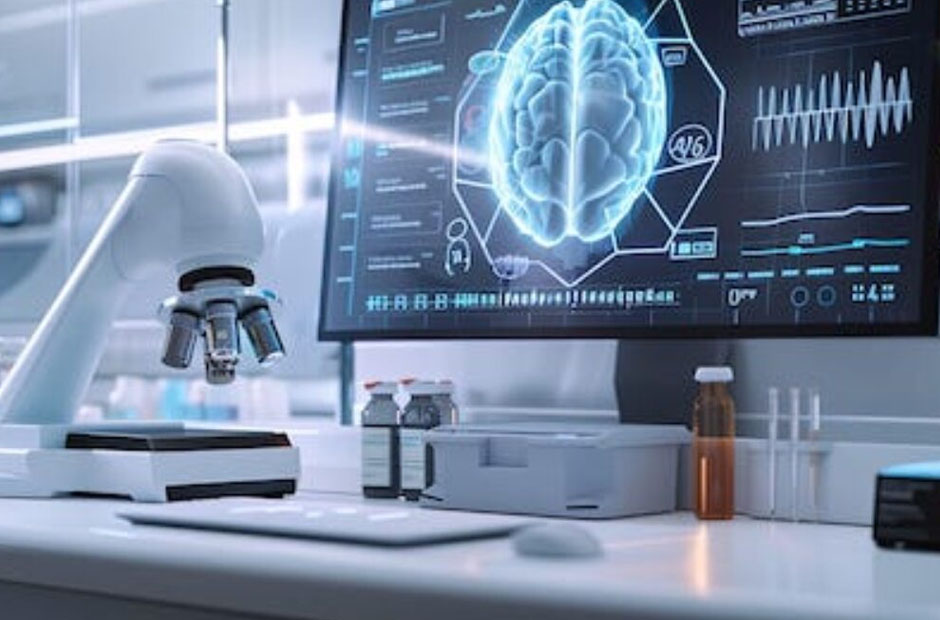
A critical turning point has been reached in the pathology lab. For more than a hundred years, there was no other way for a scientist to view what was happening at a microscopic level in a tissue than by using a microscope. However, what we see today is more akin to a high-tech flight deck than a traditional working environment. The digital pathology lab has progressed from being an indulgence for a select few to an essential service for the medical industry.
Software solutions such as NovoPath are right in the middle of this revolution. With high-resolution digital imaging and artificial intelligence, these solutions are providing answers to the massive amounts of data which made digital work seem slower than microscopic analysis in the past. In 2026, artificial intelligence is no longer a distinct solution. Instead, it becomes the engine behind easier-to-navigate digital imaging, more accurate scoring, and accessibility from anywhere in the world.
Handling the Volume of Gigapixel Data
The first problem with early digital pathology was the size of the images. If you scan a physical slide at the resolution required to make a diagnosis, you end up with what is called a “whole slide image.” This image may contain billions of pixels. If the pathologist had to scroll through the images like viewing a photograph, this would be an ergonomic nightmare.
This is resolved by AI-powered systems as they handle the viewing of the images. They serve as an intelligent interface that bridges the gap between the data and the doctor. Pathologists no longer have to focus on the digital wasteland but instead have tools that focus on the viewing. The software pre-processes the image as it is scanned, prepping the tiles of the data so that zooming in and out is as smooth as viewing through a lens. This eliminates the lag in viewing the images, allowing the pathologist to concentrate on the details of the cells.
Role of AI in Smart Viewing
Beyond simply allowing the pictures to load more quickly, the impact of AI is a complete paradigm shift regarding how pathologists interpret what they are viewing. In the past, each case began with a manual scout review of the slide. Now, this is accomplished by the AI within the seconds following digitization of the slide.
Automated Case Triage
In a high-volume lab, cases typically lie in a queue based on their date of receipt. AI turns this model on its head. When slides come in, a quick scan is done for suspicious patterns or markers of high-grade malignancy.
- Priority Sorting: The system can automatically identify high-priority cases and place them at the top of the worklist.
- Specialty Routing: If a particular type of tissue is identified by the AI, it can route that particular case straight to a sub-specialist that has experience with that type of tissue, whether it be a complex skin biopsy or a rare bone marrow sample.
Highlighting and Heatmaps
One of the most valuable aids to viewing is what is known as a heatmap. The AI computer can lay a heat overlay on top of the tissue. Where there is rapid cell growth or irregular cell forms, it may light up red, while normal areas remain blue. It does not substitute the pathologist’s gaze; it merely points it. It makes sure that a small region of aggressive cells, known as a needle in a haystack, is front and center from the very beginning.
Accurate Scoring and the End of Subjectivity
An important aspect of the pathologist’s work is numbers. Whether it is the number of cells that are actively dividing in a tumor or the percentage of cells that have reacted to a particular chemical stain, the numbers are important. In the past, this was accomplished through estimation. Two experts would examine the same slide and come up with slightly different numbers based on their expertise.
This process is made certain by the mathematics of AI. Because a computer does not get tired and does not have to eyeball a result, it can count thousands of individual cells in a heartbeat.
- Standardized Results: The results from the AI system for biomarker scoring guarantee each patient receives a result for the same set of criteria.
- Quantitative Accuracy: In cases where the treatment needs to have a certain level of cellular activity to be effective, having the actual percentage of 14% rather than 10 to 20% can be entirely different for the patient.
Breaking Geographical Chains: Access from Anywhere
The most freeing thing about 2026 is the fact that the laboratory is no longer a place you have to travel to. In the glass slide world, the diagnosis was tied to the location of the tissue. If you weren’t within the same building as the slide and the microscope, you couldn’t do the work.
Digital systems have ended these shackles. With cloud-ready solutions such as NovoPath, the image and the AI evaluation are available anywhere with an internet connection.
Tele-Diagnosis and Work-Life Balance
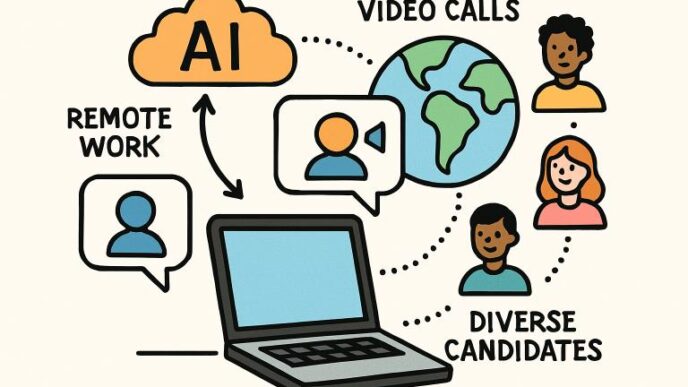
Pathologists can now sign out cases from a home office, a satellite office, or a consultation room anywhere in the country. The flexibility that this technology allows the medical profession has proved essential in the face of the world’s shortage of medical specialists. The labs can now employ medical experts who reside in other time zones, thus guaranteeing that the work is being done all day and all night. For the pathologists, it means they no longer have to work in a basement office in a hospital.
Instant Global Collaboration
When a local pathologist identifies a case as rare or questionable, they no longer have to place a slide inside a box to send to a university center. They simply send a secure electronic link.
- Virtual Consults: Two professionals can look at the same high-resolution slide simultaneously on their screens. When one of them zooms in, the other sees exactly what they are seeing.
- Tumor Boards: Multidisciplinary teams can have virtual meetings, where AI-driven annotations enable the teams to discuss the case as if the teams were all in the same place. This process, which took weeks, can be completed in real-time.
The Integrated Cockpit Experience
The actual power of the new systems is that they do not view the use of AI as another gadget. If a doctor is required to open three different applications to view an AI score, they will not use it. Platforms such as NovoPath prioritize a streamlined workflow.
The software is a cockpit for the pathologist. Upon opening a case, the screen displays the patient history, high-resolution images, as well as the scores from the AI all on one page. The data from the AI is directly incorporated into the final report. The pathologist can review the results from the machine, make any needed changes, and then sign off on the case. This process is safer and more efficient because there is no tedious data entry that can sometimes result in transcription errors.
A Future with a Focus on Accuracy
The aim of AI in 2026 is certainly not to automate a doctor out of a job. A computer can recognize a pattern, but it cannot comprehend the context of a human life. By taking over the counting, the sorting, and the manual search, AI allows pathologists more time for the high-level medical decision-making they were trained for. It enables digital imaging that is intuitive, understandable, and accessible to anyone, anywhere. Looking ahead, the labs that are taking this digital leap are not simply upgrading their software but building a faster, more accurate, and more human-centric way of reaching a diagnosis.