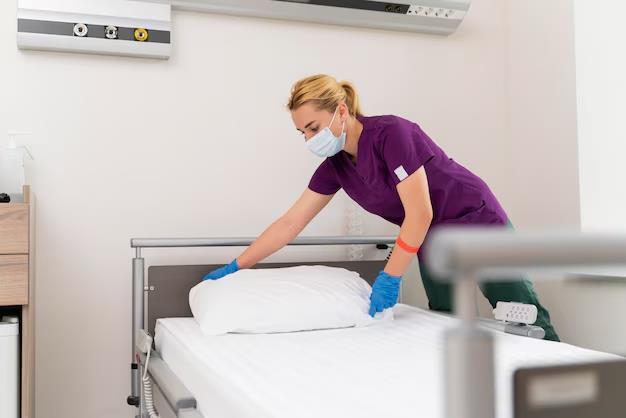
In a hospital, it is imperative to maintain the highest degree of cleanliness and hygiene for the safety and well-being of patients. While the hospital management takes care of washing and cleaning staff uniforms and patient gowns, the bed linen often tends to get overlooked. While cleaning uniforms is important, it is equally important to make sure that the bed linen is tidy and free of germs. It is critical for a hospital authority to provide each patient with clean and germ-free bedsheets, pillow covers, blankets, and mattresses.
However, given the constant inflow of patients and visitors, the hospital management often faces problems in tackling the huge volume of laundry work. As such, in order to make sure that the bed linen is devoid of pathogens, the hospital staff may choose to outsource the laundry work to a laundry service platform. Commercial laundry services adhere to strict protocols and use specialised industrial-grade machines for cleaning bed linen.
Outsourcing the laundry work to a laundry care service provider also helps in maintaining regularity when it comes to laundering hospital bed linen. Read on to know more about the importance of professional laundry services for hospitals.
Treatment of hospital bed linen at a professional laundry service centre:
Laundry service centres follow a tightly controlled cycle of stages. The stages generally include assortment, pretreatment, washing, drying and disinfection, quality checks, storage, and delivery of laundry. The professionals comply with strict industrial guidelines to maintain hygiene and prevent contamination during the laundry cycle. Each stage is briefly described below:
Assortment Stage
At the initial stage, the soiled bed linen is collected in colour-coded laundry bags to prevent bleeding of colours during the washing stage. If the bedsheet or cover is too heavily soiled, then it is separated from the rest of the laundry and washed separately with specialised chemicals. Heavily soiled linen often consists of body fluids and blood, which may cause cross-contamination if washed with the rest of the laundry. Such linen is often placed inside a permeable laundry bag and loaded into the washing machine without manual handling. At every stage of the laundry cycle, it is ensured that the heavily soiled linen never comes in direct contact with semi-soiled or clean linen.
Pretreatment stage
During the pretreatment stage, the soiled bed linen is sorted on the basis of contamination level. Expert launderers use enzymatic solutions and bleaching agents for the elimination of stains. Laundry service staff also subject the soiled bed linen to a preliminary thermal disinfection treatment before the washing stage to make sure that the bedsheets, pillowcases, and blankets are completely free of germs.
Washing stage
Washing is the most critical stage of laundering bed linen. Commercial laundry machines are bigger in size and more advanced than household washing machines. Such machines are equipped with programmable controls and cycles designed in compliance with medical hygiene standards. Experts recommend washing hospital bed linen at around 60–90°C, which helps to kill pathogens. Industrial laundry centres also mandate thermal disinfection of bed linen at around 71°C for at least half an hour for complete elimination of infectious germs.
Hospital bed linen is often made to undergo chemical disinfection treatment for the elimination of microbes and foul odour. Commercial Laundry service providers generally use detergent in combination with hydrogen peroxide, peracetic acid, and chlorine to wash and sterilise bed linen. Mechanical action of agitation is also necessary for the deep penetration of water, detergent, and chemicals into the fabric of hospital bed linen. Moreover, industrial laundry service providers wash the hospital bedsheets in extended cycles to provide sufficient time for the heat and chemicals to act effectively on bed linen.
Drying Stage
Laundry operators use commercial drying machines for drying bed linen after the washing stage. After drying, the bed linen is ironed using industrial-grade pressing machines. Ironing not only helps in the elimination of moisture but also adds a boost of sterilisation by exposing the fabric to high heat. Proper drying and ironing of bed linen helps prevent fungal growth and lends a professional finish to the fabric.
Quality Control and Inspection
After washing and drying, the clean linen is inspected for tears, remnant stains, and frayed threads. Laundromats often provide additional services to fix such discrepancies. For hospital laundry, professional laundry service centres maintain compliance with stringent quality check protocols. Such protocols include periodical microbial testing of laundered linen to ensure compliance with hygiene benchmarks.
Storage and delivery
After the cleaning session, the freshly laundered bed linen is stored in breathable garment bags and delivered to the hospital.
Conclusion
Laundry service units use high-end technology for laundering hospital bed linen. Top-tier laundry service centres use barrier washer-extractors that have two doors for loading soiled linen and for unloading clean and fresh linen. This ensures strict separation of soiled and disinfected bed linen. Some laundry service centres also use ozone laundry technologies that facilitate absolute disinfection of soiled bed linen during the washing cycle by the introduction of ozone gas. Advanced laundry service centres use powerful AI-based technologies for optimisation of washing parameters and prediction of laundry maintenance needs.
If you are on the lookout for a laundry service centre that provides excellent hospital bed linen laundry service, then look no further than Hello Laundry. Hello Laundry offers premium washing, ironing, cleaning, and dry-cleaning services at affordable rates. Reach out to the professionals of Hello Laundry today for all your laundry requirements.