A Sanctuary Between Sky and Sea
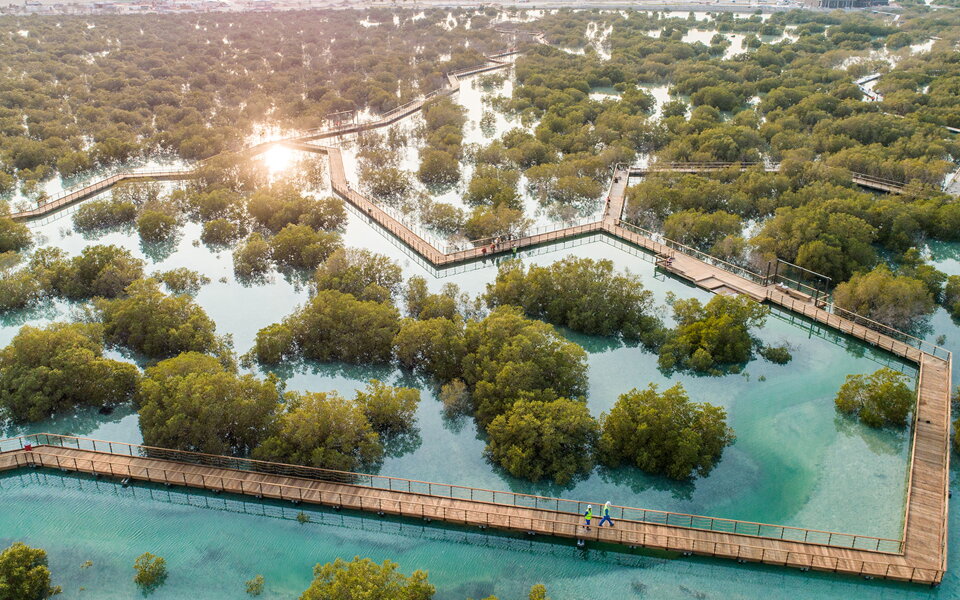
Slip off the expressway that threads Yas and Saadiyat Islands, and the capital’s hum drops away. In its place: the hush of wind in leaves, the ticking of tiny crabs, and channels of calm water mirroring a soft desert sky. Welcome to Jubail Mangrove Park, a protected slice of coastal wilderness that sits a short drive from Abu Dhabi’s glittering skyline yet feels a world apart.
Gently inviting park design. Elevated boardwalks along the shoreline guide you over roots without harming them. Kayaks float over small canals at a courteous pace, while guided excursions reveal a hidden environment most of us ignore. It’s a wilderness vacation, but also a classroom, conservation lab, and a quiet promise that growth and guardianship can coexist.
Why Mangroves Punch Above Their Weight
Mangroves are coastal overachievers. They’re the living architecture that holds the edge of land in place, the biological engines that recycle nutrients, and the caretakers of countless creatures who nest, feed, and grow among the tangle of roots.
- Carbon champions: Mangroves lock away carbon in their soils far more efficiently than most land forests, making them vital allies in climate action.
- Natural armor: Their intertwined roots blunt waves and help stabilize shorelines, reducing erosion and buffering storm surges.
- Cradle of life: Juvenile fish, crabs, mollusks, and a parade of birds—herons, egrets, even wintering flamingos—find shelter and food in this living maze.
In a place like Abu Dhabi, where desert meets sea and every degree of balance matters, mangroves aren’t just “nice to have.” They’re strategic green-blue infrastructure that keeps the coast alive and resilient.
Learning in Motion: Education on the Boardwalk
Jubail Mangrove Park turns curiosity into a field trip you can walk through. Discreet signage along the boardwalk breaks down how mangroves breathe in saltwater, how their roots filter and shelter, and why the mud beneath your feet is a carbon vault in disguise. You learn by seeing, but also by listening—to the creak of the wood, the flutter of wings, the soft plop of a fish in the shallows.
For school groups, the park is a live lab. Students trace water quality, map habitats, and meet conservation where it lives. Families discover together—spotting fiddler crabs waving like tiny conductors or watching a heron spear breakfast in silver flashes. That’s the magic: the science is solid, but the delivery is pure wonder.
Eco‑Tourism Done Right
Visits to delicate ecosystems require careful choreography, which the park understands. Elevated boardwalks protect roots and invertebrates from foot traffic. Kayak routes avoid sensitive areas where young fish hide and birds forage by following established waterways. Group sizes are controlled; stillness is intentional. Even lighting follows wildlife and night sky patterns.
The result is a model of tourism that gives more than it takes. Photographers, birdwatchers, and weekend wanderers get front‑row seats to the city’s wild heart, and the habitat remains intact for the species that call it home. It isn’t a compromise; it’s the point.
Aligned With Abu Dhabi’s Sustainability Vision
Abu Dhabi’s broader sustainability agenda—spanning clean energy, circular economies, and biodiversity protection—comes to life here in the simplest way: by protecting what works naturally. Safeguarding mangrove forests means protecting one of the region’s most effective carbon sinks, a haven for native and migratory species, and a living example of climate adaptation.
Jubail Mangrove Park fits into that bigger picture as proof-of-concept. It shows how infrastructure, policy, and public engagement can align to enhance resilience, not just mitigate harm. Every careful boardwalk plank and measured paddle stroke is part of a larger strategy to grow smarter and greener.
Wellbeing Among the Roots
Nature restores in ways data can only hint at. Wander the boardwalk and you feel your pace match the tide: slower, steadier, more present. The salty air, the filtered light under the canopy, the simple act of listening—these things turn down the mental static. Families come for the photos and leave with a calmer weekend. Runners trade pavement for planks. Lunch breaks become mini-retreats. It’s wellness that needs no membership card.
Threads of Heritage in a Modern City
Heritage isn’t only stone forts and museum wings. In Abu Dhabi, it’s also the living tapestry of the coast—the places where pearl divers once set out, where traditional fishing thrived, where shorebirds have landed for centuries on their migratory routes. The mangroves hold those stories in their timber and tide. Protecting them isn’t nostalgia; it’s continuity. It’s a way of saying the future has roots here, and they matter.
Looking Ahead: Growing With Nature
The park’s role will change with the city. Expect sophisticated visitor management that scales without stress, habitat monitoring, and degraded patch restoration. Technology enhances the experience with water quality monitoring and interactive guides, while traditional stewardship remains grounded.
Jubail Mangrove Park’s biggest lesson is simple: when you design with the ecosystem, not against it, resilience follows. The city gets healthier, the coast grows tougher, and a generation of residents learns that progress can be tender, too.
FAQ
Where is Jubail Mangrove Park located?
It’s set between Yas Island and Saadiyat Island in Abu Dhabi, a short drive from the city center.
What can I do at the park?
Stroll the elevated boardwalks, join guided walks, or explore designated kayak routes through the mangrove channels.
Why are mangroves important?
They store significant amounts of carbon, protect shorelines from erosion, and provide vital habitat for fish and birds.
Is the park family‑friendly?
Yes, the boardwalks are accessible and safe, with clear signage and plenty to see for all ages.
Do I need to book in advance?
Advance booking is recommended for guided tours and kayaking, especially on weekends and holidays.
What wildlife might I see?
Look for herons, egrets, and seasonal flamingos, plus crabs, fish, and other coastal creatures.
Is kayaking suitable for beginners?
Yes, routes are calm and guided options are available for first‑timers.
When is the best time to visit?
Mornings and late afternoons offer cooler temperatures and great light for wildlife watching.
Can I visit year‑round?
The park is open year‑round, though cooler months provide the most comfortable conditions.
Are there any rules I should know?
Stay on boardwalks, follow marked kayak paths, and keep noise low to protect wildlife and habitats.