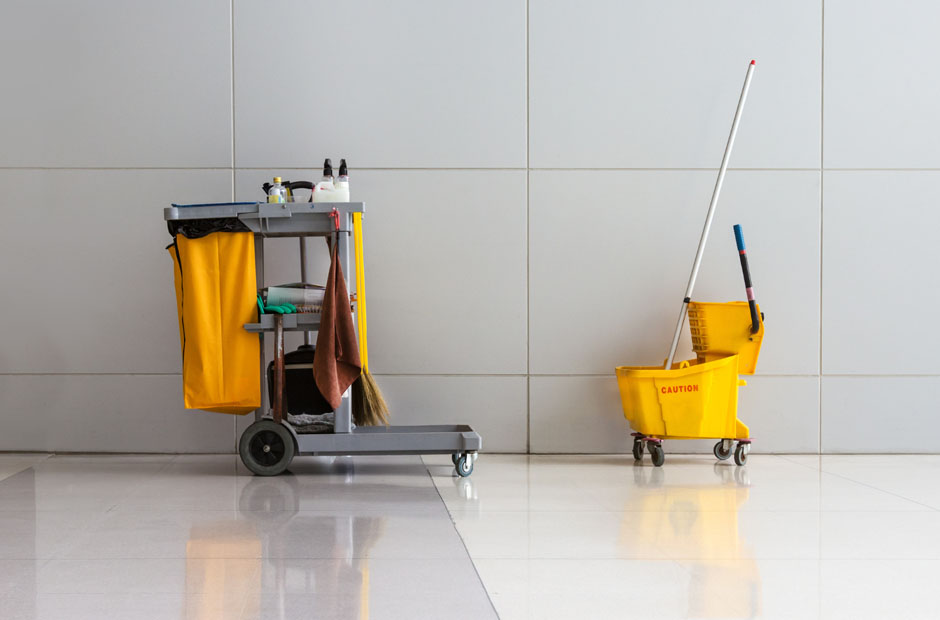
High-traffic commercial cleaning accounts for everything from dirt tracked in on shoes to repeated surface contact on handles to ongoing floor wear. Heavy traffic increases contamination and shortens the duration of cleaning effectiveness. Cleaning methods such as sweeping, vacuuming, and disinfecting, along with timing and scheduling, are determined by traffic levels. The following are the areas of focus for efficient commercial cleaning in spaces with high traffic:
Dirt Management
High-traffic entry points typically collect more soil and debris. It can grind into surfaces, causing faster wear and dulling finishes. Frequent vacuuming and sweeping remove dirt, sand, and other debris before they scratch floors or stain the carpets. Walk-off mats placed just outside and inside entrances trap dirt and debris before it spreads, helping to reduce the amount of dirt in the area. Scraper mats remove heavy grit, and absorbent mats soak up moisture. Use them in tandem to protect floors and carpets. Trained staff use proper vacuuming techniques, such as slow passes, to remove as much debris as possible. Upright vacuums are efficient on carpets, whereas canister vacuums are better suited to hard floors.
Surface Hygiene
In busy environments, microbes commonly spread through direct contact on handles, switches, railings, counters, and elevator buttons. EPA-approved disinfectants are often used in commercial cleaning in routine sanitation, keeping surfaces wet as specified by the manufacturer to fully kill bacteria and viruses. Porous high-touch items, such as upholstered rails, need steam vapor to reach deep surfaces without over-wetting, while electrostatic sprayers provide even disinfectant coverage on hard surfaces.
Microfiber cloths paired with sprays remove dirt before, and UV tools, like UV-C lamps, disinfect low-traffic surfaces to reduce germs before peak periods. To prevent microbes from developing resistance, disinfectants with different active ingredients are alternated. Post-clean ATP swabbing measures residual microbes, highlights areas needing improved cleaning, and helps prevent the spread of germs in high-traffic areas.
Cleaning Schedules
Cleaning plans pair dusting and spot checks during busy periods with deeper cleaning during slower periods. This helps keep areas clean at all times. Restroom service, floor care, and sanitation in commercial cleaning are scheduled to coincide with occupancy gaps, such as after lunch or prior to opening. Coordination with the facility team helps to prevent hold-ups by scheduling around meetings and shift changes.
Spill Response
Portable kits containing absorbents, scrapers, and neutralizers allow workers to respond quickly to spills. They are placed in high-risk areas, such as food service zones and restrooms. During spill response procedures, spotters are responsible for securing the area, while responders follow a set order, soaking up liquids first, then solids. Absorbent booms and socks create barriers around spills, directing liquids away from main walkways toward service paths. Drain guards block runoff from reaching high-traffic areas, such as HVAC grates or escalators in malls and offices.
Hire Commercial Cleaning Services
High-traffic facilities require professional commercial cleaning services. They handle frequent surface contact and rapid soil accumulation. Professional cleaning services use standardized procedures, trained personnel, and routine quality checks to keep consistent conditions across active spaces. Experts clean surfaces effectively while minimizing disruption to daily activities. Hire commercial cleaning services to assess site conditions and develop an effective cleaning plan.