







Why Simulate Medication Administration?
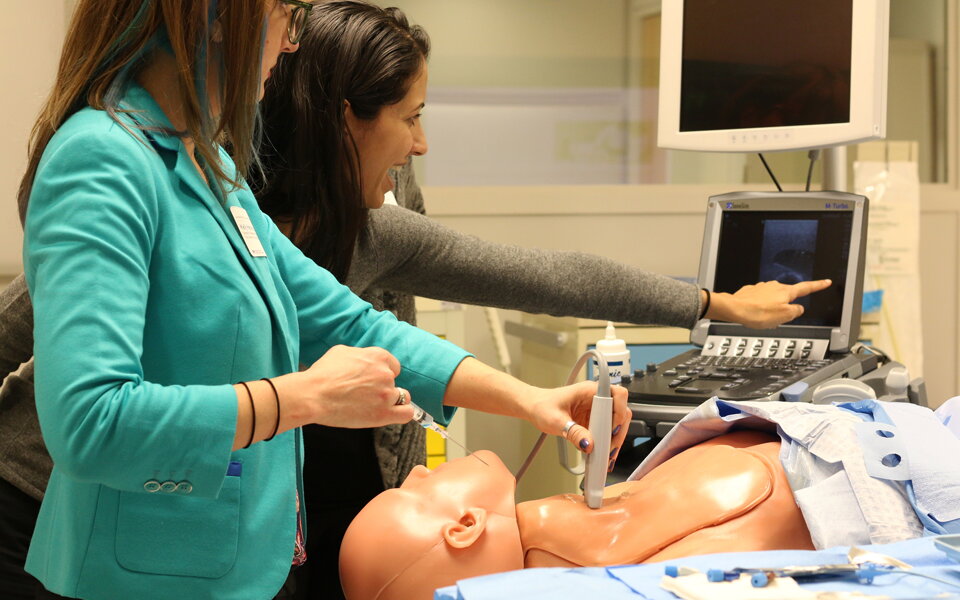
Picture a quiet skills lab: the soft beep of a monitor, a chart glowing on the screen, a dose due at 0900. It looks and sounds like a hospital, but the “patient” is a high-fidelity mannequin, and this is where learners rehearse the moments that matter most. Medication administration simulation gives students and clinicians a safe runway to practice, pause, rewind, and try again—until the sequence of safety checks and clinical decisions becomes second nature. No risk to real patients, all the realism of the job.
Confidence, One Repetition at a Time
Early on, drug names, dosages, and routes compete. Repetition fixes that. Students simulate the process—verify identity, confirm allergies, calculate dose, choose route, timing it precisely, document—then loop back and repeat. With each cycle, knowledge becomes muscle memory, hands steadier, voice clearer, and confidence slowly grows.
Turning Mistakes into Muscle Memory
A skipped step is a lesson here, but a near miss in real life. Miscalculated drip rate, missing allergy alert, premature push—the simulation space tolerates inaccuracy. After debriefing—what occurred, why, how to solve it—students repeat the situation with the fix. Rinsing and repeating turns “I won’t forget next time” into “I can do it under pressure.”
Technology That Feels Like a Ward
Modern setups are more than role-play. High-fidelity mannequins blink, breathe, and respond to medications with changing vitals. Barcode scanners, smart pumps, and electronic medication administration records (eMARs) mimic the digital footprint of a real unit. Scenarios run on authentic timelines with realistic interruptions—a ringing phone, a worried family member—to mirror the cognitive load of the floor. The result: practice that looks, sounds, and stresses like the real thing.
Safety Rituals, Lived Not Lectured
The “rights” of medication administration don’t stick because they were listed on a slide; they stick because learners perform them in context. Identity confirmed, allergies checked, dose and route verified, timing aligned, documentation completed—plus the often-forgotten pieces like indication, patient education, and evaluation of effect. Doing the ritual, not just reciting it, locks in a safety habit that holds when the unit is short-staffed and the call lights stack up.
Teamwork That Prevents Errors Before They Start
Medication safety is a team sport. Good simulation weaves in physicians, pharmacists, and nursing colleagues so learners practice closed-loop communication and escalation. They verify ambiguous orders, reconcile meds during handoffs, and coordinate high-alert drips with second checks. Watching how information moves—or stalls—across roles helps participants build reflexes that keep errors from slipping through the cracks.
Bridging Classroom PowerPoints to Bedside Practice
Pharmacology lectures make sense; simulation makes them useful. Calculating a pediatric weight-based dose in a workbook is one thing—calculating it with a jittery parent asking questions while a monitor beeps is another. The bridge from theory to action happens here: problem-solving with real devices, within time constraints, under gentle performance pressure. Knowledge stops being abstract and starts being actionable.
What Medication Administration Simulation Really Delivers
Think of it as a well-rehearsed stage production with clinical stakes. The script is a realistic case; the set includes the technology you’ll use; the coaching comes through structured feedback. Instructors watch for clinical reasoning, safety checks, equipment handling, priority setting, documentation quality, and communication. The uniformity across scenarios makes assessment fair and feedback precise, so learners know exactly what to improve and how.
Easing the Leap from Student to New Grad
The first weeks on a unit can feel like stepping onto a moving treadmill. Simulation lowers the heart rate. New clinicians arrive having practiced prioritization, interruptions, and time-sensitive meds in a controlled environment. They’ve faced a hypotensive dip after a dose, rechecked an order that didn’t look right, and spoken up when an allergy didn’t match the medication profile. Anxiety drops; readiness rises.
Not Just for Beginners: A Playground for Pros
Experienced nurses, advanced practice providers, and pharmacists use simulation to stay sharp. New formulary additions, updated pump libraries, or revised protocols are safer to learn hands-on before go-live. Units rehearse high-risk situations—insulin infusions, anticoagulant reversals, pediatric code doses—so the team moves together when those rare, high-consequence moments arrive. It’s continuing education with muscle.
Designing Scenarios That Catch Real-World Traps
The best scenarios borrow from the kinds of errors that happen in busy hospitals: look-alike/sound-alike meds, duplicate therapies after transfers, decimal placement mishaps, or a missed renal adjustment. Facilitators plant these traps purposefully, then guide learners to spot and neutralize them—scanning barcodes, using dose-range alerts wisely, and consulting pharmacy. Practice spotting the trap becomes practice avoiding it.
Debrief: Where the Learning Locks In
After the last dose is documented, the lights metaphorically come up and debrief begins. It’s structured, curious, never punitive. Participants replay the case, untangle thought processes, and connect actions to patient physiology. Facilitators highlight bright spots and pinpoint fixable gaps, often aligning feedback to a simple rubric. That reflection cements the skill more than any checklist alone.
The Ripple Effect on Patient Safety
Every repeated safety check and every crisp exchange of information narrows the path for error. Teams trained in simulation catch inconsistencies earlier, respect pause points before high-alert meds, and double-check when something feels off. Over time, those micro-actions translate to fewer adverse events, smoother handoffs, clearer documentation, and a trust that patients feel even if they can’t name it.
The Next Wave: Immersive, Data-Rich, and Anywhere
The toolbox keeps expanding. Virtual reality drops learners into a bustling med-surg hall without leaving a classroom. Screen-based sims let clinicians practice documentation and order verification between shifts. Analytics pull heat maps of where mistakes cluster—calculation, pump programming, timing—so training can target exactly what needs reinforcement. The north star remains the same: lifelike practice, zero harm, better care.
FAQ
What is medication administration simulation?
It’s a realistic, practice-based approach to learning med safety using mannequins, digital tools, and scripted scenarios that mirror clinical care.
Who uses it?
Nursing and medical students, new graduates, and experienced clinicians across hospitals, clinics, and academic programs.
Does simulation replace real clinical rotations?
No; it complements clinical time by building skills and confidence before and during real patient care.
How realistic are the mannequins and setups?
High-fidelity mannequins show vital sign changes and responses to meds, while eMARs, barcode scanners, and smart pumps match real-world systems.
How are learners evaluated?
Instructors use clear rubrics to assess safety checks, calculations, equipment use, communication, prioritization, and documentation.
Do you need VR to do this well?
Not at all; VR is a bonus layer, while high-quality learning happens with mannequins, task trainers, and screen-based cases.
What common errors does simulation help prevent?
Calculation mistakes, wrong-patient or wrong-dose errors, timing issues, and look-alike/sound-alike medication mix-ups.
How often should teams train?
Regular, brief sessions—monthly or quarterly—keep skills fresh and aligned with changing protocols.
Can simulation reduce anxiety for new clinicians?
Yes; repeated, realistic practice turns unknowns into familiar routines, which lowers stress and improves performance.
Is it useful for rolling out new meds or devices?
Absolutely; teams can rehearse workflows and troubleshoot in a no-risk environment before changes hit the floor.
What teamwork skills are emphasized?
Closed-loop communication, second checks for high-alert meds, escalation pathways, and precise handoffs.
How does debriefing work?
After scenarios, facilitators guide a structured reflection to understand decisions, reinforce strengths, and address gaps quickly.


