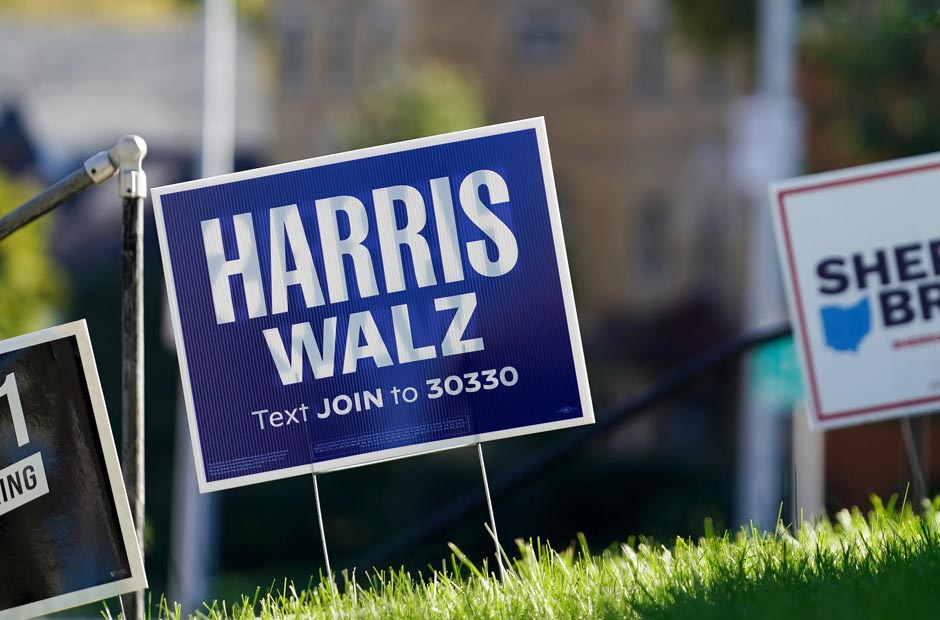
Political yard signs are a grassroots tradition, a simple and relatively inexpensive way for campaigns to project visibility and for voters to publicly display their allegiance. They serve as tangible markers of local support, creating a visible patchwork of political preference across neighborhoods and alongside major thoroughfares. Despite their modest size and minimal cost, their removal or destruction has become a recurring issue in nearly every election cycle.
For campaigns, replacing stolen signs represents an unexpected drain on financial resources and volunteer time, forcing workers to divert efforts from voter mobilization to simple inventory replacement. For homeowners, yard sign theft can feel like an invasion of privacy or an act of petty political intimidation aimed at silencing their voice within the community.
The act of removing these signs is rarely random, often stemming from complex psychological, ideological, and social motives that go beyond simple vandalism. The widespread occurrence of political yard sign theft reflects deep-seated tensions and disagreements about the nature of public discourse and political competition in the local sphere.
Motivations Behind Sign Removal
One primary motivation behind sign removal is pure ideological opposition, where the thief aims to symbolically—and temporarily—erase the presence of a candidate they strongly dislike. This is often driven by a genuine frustration that the opposing viewpoint is being broadcast in a space they frequent or consider their own territory.
Another common driver is the social desire to suppress visible support for a candidate perceived as unpopular or controversial within a specific area. In closely divided neighborhoods, the theft might be an attempt to project an image of unified opposition, suggesting that the community does not tolerate the displayed viewpoint.
Less frequently, the motivation can be practical or opportunistic. For instance, sometimes signs are simply stolen by rival campaigns for immediate reuse or destruction, or they are removed by individuals for prank-related reasons, minimizing the genuine political message and maximizing the nuisance factor.
Legal and Property Considerations
From a legal standpoint, a political yard sign placed on private property with the owner’s permission is considered private property. Its removal constitutes theft or vandalism, which can be prosecuted under state and local laws, depending on the value of the property and the intent behind the removal.
However, the legal prosecution of political yard sign theft is often complicated by the low monetary value of a single sign and the difficulty of identifying the perpetrator, especially when the crime occurs late at night. Law enforcement typically prioritizes more serious offenses, leaving many victims with little recourse.
Property law also dictates that signs placed illegally on public right-of-ways, utility poles, or medians may be lawfully removed by government or municipal workers. Confusion over the boundary between private lawns and public property sometimes leads to accidental but legal removal by crews performing maintenance.
Community and Neighborhood Dynamics
Sign theft frequently correlates with neighborhoods experiencing high levels of political tension or social segregation. When residents feel their local community is fundamentally divided along partisan lines, the signs become proxies for that broader disagreement.
In some cases, the act of theft is performed not by an outsider but by a neighbor, escalating the tension from a political dispute into a personal feud. The targeted removal of signs from a single home within an otherwise homogeneous block can feel like a direct, hostile challenge to the homeowner’s right to express their views.
This escalation can lead to a cycle of retaliatory theft, where supporters of one side remove the opponent’s signs to “level the playing field” or avenge a prior loss. This dynamic turns what should be a simple political decoration into an active weapon in a low-stakes, high-emotion neighborhood conflict.
Impact on Campaign Visibility
The short-term impact of sign theft is primarily visual: the immediate, physical disappearance of the candidate’s name from a specific location. Since signs are often targeted in high-traffic areas, this visual void can temporarily reduce the perceived ubiquity and momentum of the campaign.
However, the symbolic effect is often more profound. The theft can galvanize the candidate’s base, confirming their belief that they are fighting against an aggressive, unfair opposition, which can spur increased volunteering and donation efforts toward sign replacement.
For campaigns, the costs associated with sign replacement are not trivial; producing and distributing thousands of replacement signs diverts funds that could have been spent on crucial digital advertising or voter outreach in the final weeks before the election.
What Theft Reveals About Political Climate
The sustained and frequent occurrence of political yard sign theft serves as a barometer of the national political climate, revealing a decrease in tolerance for opposing viewpoints in the public square. It suggests that political expression is increasingly seen as a confrontation rather than a simple statement.
When political yard sign theft is rampant, it often signals a level of political polarization so intense that it overrides basic respect for private property and the right to free expression. The sign is not just a name; it is seen as an offensive symbol that must be silenced or removed.
Ultimately, the phenomenon highlights a fundamental fragility in public political tolerance. Campaigns and communities must contend with this reality, often necessitating the use of more resilient, less physical forms of communication to ensure their message reaches voters without fear of localized suppression.