Elite playing surfaces are not created by accident, but through careful planning, attention to detail, and an ongoing commitment to performance. The way in which sports fields are built and the way in which they are maintained work hand in hand to provide safe, consistent, and durable playing surfaces. Understanding how these two factors connect is important for sports clubs and facilities managers who want to get the most from their outdoor spaces.
Raising the standard in sports facilities
Today’s sports turf users are demanding. Players want to feel consistent traction and footing underfoot. They want the ball to react in predictable ways when kicked or rolled across the surface. They also expect pitches to look uniform and well-groomed, even after days of poor weather. All of these expectations start with the work of reputable sports field construction companies. These companies are experienced in designing and building sports fields that are durable, well-drained, and able to host healthy turf grass growth. However, no matter how durable a sports pitch is, it will quickly fall into disrepair without the right kind of ongoing care. Sports field turf maintenance is what helps to protect the surface and keep it performing well through all seasons.
Quality construction paves the way for durability
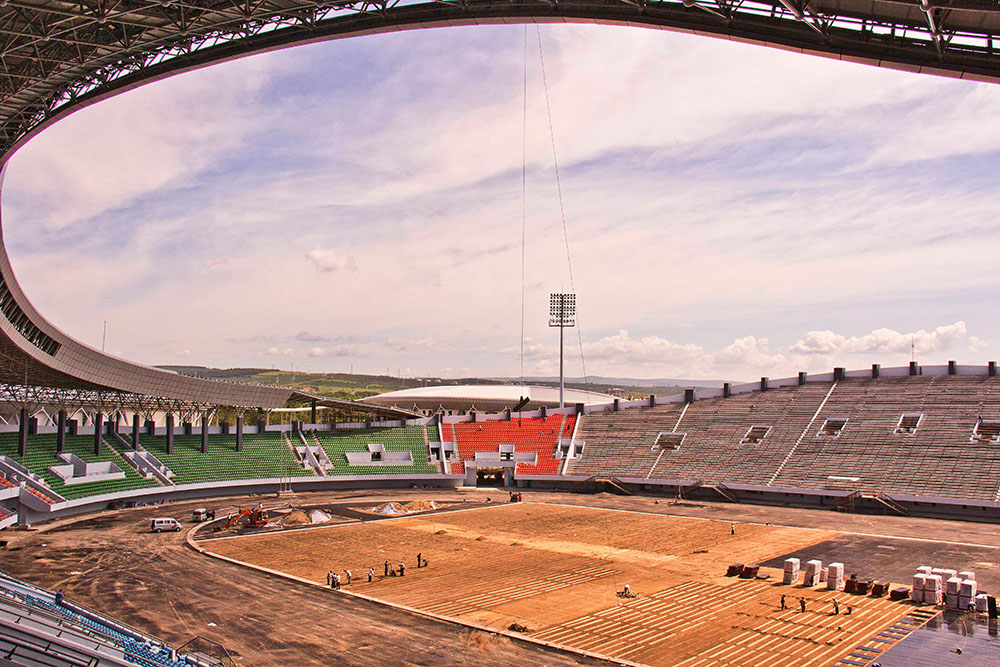
The foundation is the most important part of a sports field, even though it is rarely visible. Quality construction work ensures a firm base, a sound soil profile, and a drainage system that is able to cope with days of heavy rainfall. When the groundwork is good, the field has a head start on healthy turf grass growth and safe play.
Sports field constructors pay attention to many factors which will impact the condition. First, they level the site so that water can flow freely off the surface rather than building up in areas. They then work on the soil blend to promote strong root growth and moisture retention. Next, they install drainage to cope with heavy downpours, and they also factor in additional provisions to reduce the risk of waterlogging or areas of instability. All of these technical decisions during construction mean that daily maintenance will be more effective. They also reduce the risk of premature failure of the surface.
Maintenance is as critical as construction
The construction team will hand over the field when the build is complete. At this point, maintenance activities take over as the most important factor in the life of the turf surface. Turf is a living surface, and it changes over time, often in response to factors such as high usage and foot traffic. It also needs regular attention in order to stay healthy. When a sports field is not maintained regularly, it is prone to becoming uneven, compacted, and susceptible to disease. The resulting surface is also more likely to cause player injury, and it is much less pleasant for users.
Maintenance staff will work hard to ensure that the original design decisions are not eroded over time. They aerate the soil to help roots get oxygen. They repair wear and tear in high-impact areas, and they manage irrigation to ensure that the turf has the right amount of moisture at all times. Maintenance also checks that the turf has sufficient nutrients to stay strong and healthy. This range of tasks helps to keep the field stable, smooth, and visually appealing for users.
Construction and maintenance both help each other
Construction and maintenance are not distinct processes. In fact, they are interdependent and rely on each other for a good quality field over the long term. A good construction team will make a field easier and more efficient to maintain. Ongoing maintenance, for its part, ensures that the technical benefits built into a field are sustained over the years.
It is helpful to think of a sports field as a project rather than a completed build. The decisions that are made during construction determine how much maintenance will be required throughout the life of the field. For instance, installing quality drainage reduces the work of removing water after storms. Building a good base layer of materials means that less repair work is required when the surface becomes compacted with use. The result is a field that is smoother and safer with fewer interruptions to scheduled sports matches.
Athlete safety and performance come from this connection
Player safety and performance are a major reason why construction and maintenance need to be in sync. A poorly maintained playing surface can result in slips, inconsistent ball bounce, and changes in footing. All of these factors can lead to increased injury risk and can cause the turf to wear out prematurely.
Ideally, when both construction and maintenance are done well, the athlete has consistent traction, cushioning, and stability. This allows them to train or compete confidently, regardless of the weather or the number of players using the field. For clubs and other field owners, that also means fewer complaints, less chance of cancellations, and an overall better reputation for the quality of fields.
Guaranteed value from the entire field lifecycle
Investing in proper construction and in dedicated maintenance provides financial and practical value. Fields last longer, big repairs are needed less frequently, and daily maintenance tasks are more efficient. A maintained field also increases participation in sports within the community, and it provides more reliable venues for both events and club matches. Finally, it also safeguards the financial investment that has been made in the original build.
Facility managers and other people responsible for sports fields are better able to make strategic decisions about budgets, timing, and any future changes if they are clear on the connection between construction and maintenance. They will also have more predictable field performance during the year, which in turn makes it easier to plan for sports fixtures, club training, and local community events.
Building and maintaining a lasting partnership
Elite sports fields are not simply constructed. They are constructed with care, and they are maintained consistently. The expertise of a construction company provides the foundation which creates a surface that supports both healthy turf grass and safe play. Ongoing turf maintenance then builds on that foundation, protecting and enhancing the surface over time.
Recognising the critical importance of the connection between these two stages will help clubs, councils, and other facilities owners to achieve sports fields that are durable, attractive, and long-lasting for many years. This is the secret to keeping athletes safe, maintaining community pride, and making sure that sports facilities continue to offer value well after the field is initially built.