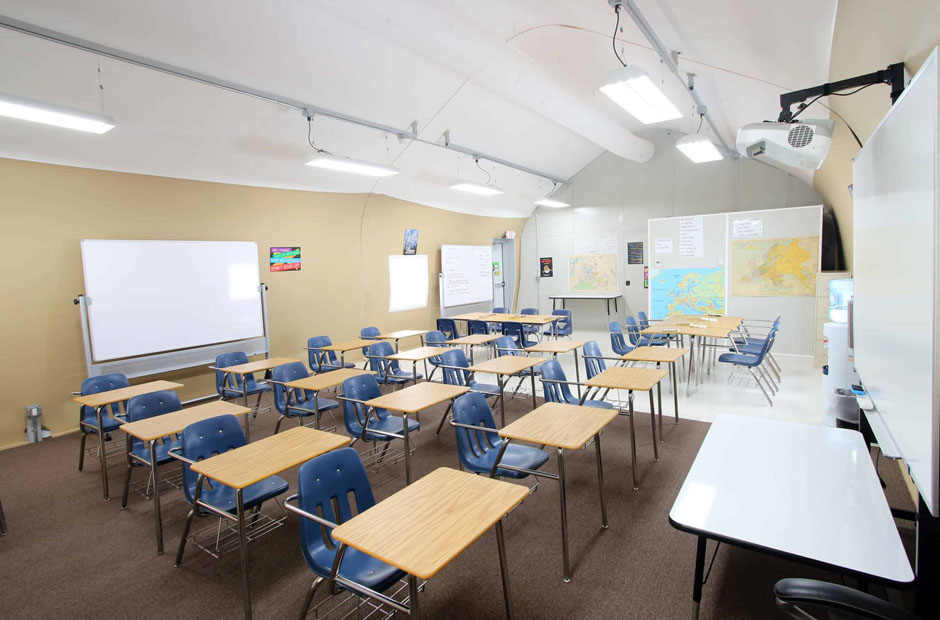
Modular classrooms are prefabricated and designed to provide additional learning space quickly with minimal campus disruption. They are built to meet educational facility standards and local building codes, and to support customization. Here are a few common questions and answers about portable classrooms:
Does a Portable Classroom Come With Restrooms?
Manufacturers may include restrooms in portable classrooms as a customization option, depending on the specific model and customer needs. The restrooms feature conventional plumbing systems and fixtures that are connected to the school’s main water and sewer lines. Plumbing systems in the buildings include piping for water and waste removal. The direct connection of the restrooms to the main sewer facilitates proper waste disposal.
Integrated restrooms are fitted with sinks, soap dispensers, and urinals as options. Experts configure the units with private partitions for toilets in different layouts. When setting up the restrooms, you can opt for in-classroom modules or separate standalone buildings. The finishes include low-maintenance, durable surfaces, such as commercial-grade vinyl tile or epoxy flooring, as well as vinyl-covered walls. Proper lighting and ventilation systems in the designs promote functionality and good air quality.
What Can a Portable Classroom Be Used For?
Modular classrooms are versatile and help meet educational and administrative needs. Their applications include solutions for the following:
- Specialized learning spaces
- Administrative offices
- Support facilities
Professionals configure modular buildings into specialized learning spaces such as computer labs, art studios, or music rooms. They equip the units with smart boards and specific power configurations to support digital learning tools. The size and layout are customizable with quiet zones for individual work or open areas for collaborative projects.
Modular designs allow portable classrooms to be reconfigured for administrative functions. They can be used as school management offices, staffrooms, or health clinics for school health services. Their customizable nature allows them to be adapted for non-classroom functions as well. Districts use these buildings as support facilities, such as cafeterias, locker rooms, or concession stands, during events.
Can I Buy a Portable Classroom After Renting It?
Builders allow clients to purchase modular classrooms after renting. You may rent the classroom for short-term needs during renovations or enrollment. When permanent buildings undergo construction, renovation, or repairs, rented portables provide space for learning. For schools experiencing spikes in student population, renting offers a quick solution to space constraints without long-term commitment. For temporary events or specialized short-term programs like summer classes, opt for rentals for a few weeks.
Purchasing a building is applicable when you anticipate needing it for several years. Buying a modular structure provides a durable solution for permanent campus expansion. This allows the school to own the asset as a facility that can be relocated as needs change. Modular companies offer lease-to-own programs to help with the purchase of portable units.
Are Portable Classrooms Safe for Students?
Professionals design modular structures to meet safety, health, and accessibility standards. The primary structure uses durable framing that provides structural integrity. High-performance insulation is integrated into walls, floors, and ceilings to regulate thermal performance. Experts build these components in a controlled factory environment and test them for durability before shipping them to buyers. The units have safety features, including fire suppression systems and secure locking mechanisms. Safety extends to the installation process, which involves trained professionals securing the units to the ground with proper foundations and supports for stability.
How Quickly Can a Portable Classroom Be Installed?
Experts can deliver and install a modular building within weeks from the start of the process. They manufacture the bulk of the building off-site, while foundation preparation and utility trenching occur simultaneously. This cuts down the project time. If a standard unit is in stock, delivery is arranged promptly. The process of building the unit beforehand reduces weather-related delays and allows for faster, more predictable assembly compared to traditional on-site construction. Once delivered to the site, the modules can be quickly lifted into place, with utility connections and interior finishing completed in a shorter timeframe.
Learn More About Portable Classrooms
Portable classrooms offer a quick solution to districts with growing student populations or new space needs. These buildings are durable and customizable, allowing buyers to add or remove components as needed. Contact a reputable building systems company to learn more about their products.