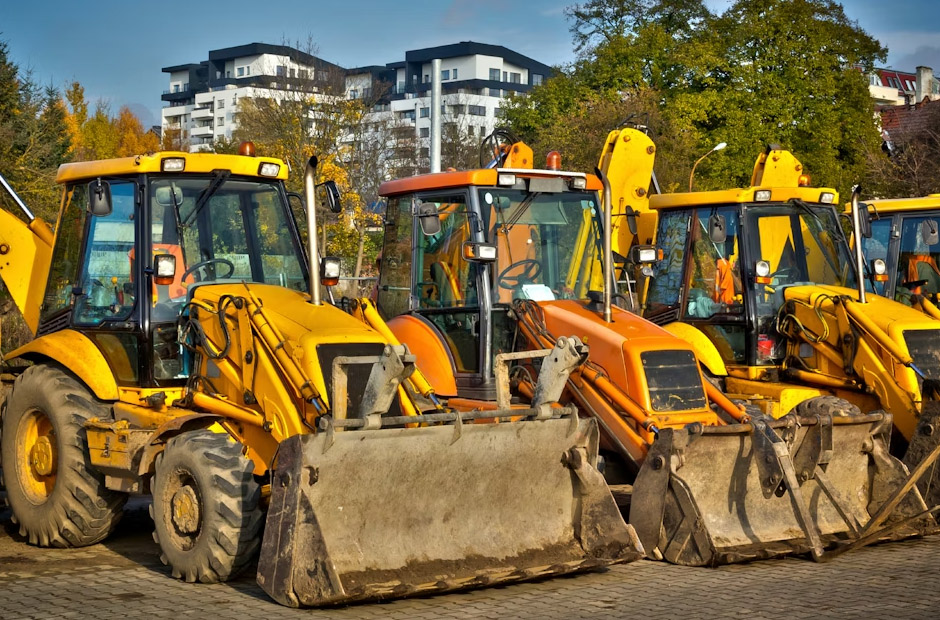
Your excavator gets preventive maintenance every 250 hours. Your project manager tracks equipment utilization rates religiously. You know exactly what each piece of machinery costs per hour and plan projects accordingly, notes Beyond Property Management team.
But your IT? That’s just something you pay for when it breaks or when you need to add another user. Laptops get replaced when they die. Software gets updated whenever someone remembers. And nobody’s tracking how much time your field supervisors waste because they can’t access project documents from the jobsite.
Construction companies are meticulous about equipment ROI but treat technology like it’s barely worth thinking about. That mindset is costing more than most owners realize.
The Real Cost of “Good Enough” Technology
Most construction firms think about IT spending the same way they think about office supplies. It’s overhead—something to minimize, not optimize. As long as people can send emails and access the estimating software, that’s good enough.
Except it’s not. While you’re thinking about IT as a cost center, your competitors are using technology as a competitive advantage:
They’re responding to RFPs faster because their document management actually works and everyone can access current drawings and specs instantly.
They’re avoiding costly rework because their field crews have real-time access to the latest plans and can catch conflicts before concrete gets poured.
They’re winning more bids because their estimating accuracy is better—they’re using connected systems that reduce errors and allow faster turnaround.
They’re improving margins because their project managers can track costs in real-time instead of discovering overruns two weeks after they happened.
You’re leaving money on the table every time your technology slows someone down, creates errors, or prevents you from operating as efficiently as you could.
Where Construction IT Costs Hide
The direct IT expenses are obvious—software licenses, hardware, maybe some support when things break. But the real costs are invisible because nobody’s measuring them:
Time Lost to Technology Problems
Your project manager spends 30 minutes every morning getting connected to the VPN, accessing files that should load instantly, and dealing with software that crashes. That’s 2.5 hours per week, over 100 hours per year. At a loaded cost of $75/hour, that’s $7,500 annually for one person—just in wasted time.
Multiply that across your entire office staff and field supervisors, and you’re probably looking at six figures in lost productivity that never shows up in your IT budget line item.
Errors From Disconnected Systems
Your estimating software doesn’t talk to your project management system, which doesn’t integrate with accounting. So information gets entered multiple times, creating opportunities for errors each time someone re-keys data.
One wrong dimension in a takeoff costs you $12,000 on a bid you won. That’s not an IT expense in your accounting system, but it’s absolutely a cost of bad technology.
Delayed Decision-Making
Your superintendent needs approval to proceed with a change order. But getting the right people to review drawings and pricing takes three days because documents are scattered across email, shared drives, and someone’s laptop.
By the time you approve it, you’ve already paid for standby time. The direct cost shows up as job cost overrun, but the root cause was technology that didn’t enable fast decision-making.
Missed Opportunities
You can’t pursue certain project types because your technology can’t support the requirements. Maybe you need better document control for Design-Build. Or real-time collaboration tools for IPD projects. Or mobile access that actually works reliably in the field.
So you stick to project types your systems can handle, even when the margins are better elsewhere.
The Equipment Analogy Construction Companies Should Understand
You wouldn’t run a 15-year-old excavator on major projects and just hope it doesn’t break down. You’d recognize that old equipment costs more in downtime, repairs, and lost productivity than investing in reliable machinery.
Yet that’s exactly how most construction companies handle IT. Running outdated systems, putting off upgrades, reacting to failures instead of preventing them, and never calculating the true cost of unreliable technology.
If you tracked IT problems the way you track equipment downtime, you’d be horrified. Every time someone can’t access files they need, every software crash, every security issue, every hour spent on workarounds because systems don’t work properly—that’s downtime you’re not measuring.
What Strategic IT Investment Actually Looks Like
Construction companies that get this right aren’t spending dramatically more on technology. They’re spending strategically and measuring the return:
Connected Field Operations
Superintendents and foremen have tablets with reliable connectivity. They access current drawings, submit daily reports, track time and materials, and coordinate with subs—all from the jobsite without returning to the trailer.
This eliminates double-entry, reduces errors, and speeds up information flow. The ROI isn’t theoretical; it shows up in fewer RFIs, less rework, and faster project closeout.
Real-Time Project Visibility
Project managers see costs and progress in real-time, not two weeks later when timecards get processed. They can identify problems early when they’re small and fixable, not after they’ve become major overruns.
Integrated Systems That Talk to Each Other
Estimating feeds into project management. Project costs flow into accounting. Time tracking connects to payroll. Information enters once and flows where it needs to go.
This reduces labor costs (less data entry), improves accuracy (fewer transcription errors), and enables better decision-making (current information instead of outdated reports).
Proper IT Services and Solutions for Construction
Rather than calling someone when things break, they have proper IT services and solutions for construction that monitor systems proactively, prevent problems, handle security properly, and think strategically about technology enabling business growth.
The Jobsite Connectivity Problem
Here’s something most construction companies get wrong: they invest in powerful estimating and project management software, then wonder why nobody’s using it effectively.
The problem isn’t the software. It’s that your field crews can’t reliably access it from jobsites.
They should be updating progress, submitting daily reports, accessing current drawings, and tracking materials in real-time. Instead, they’re taking notes on paper, photographing whiteboards, and compiling everything into reports at the end of the day—if they remember.
By the time information makes it into your project management system, it’s outdated. Decision-making slows down. Problems that could’ve been caught immediately aren’t discovered until the weekly progress meeting.
The companies getting this right have invested in:
- Proper jobsite connectivity (not just someone’s hotspot)
- Rugged mobile devices that work in construction environments
- Software that’s actually usable on tablets and phones, not just desktop computers
- Training so people know how to use the tools effectively
- Support so technical problems get resolved quickly, not “whenever someone has time”
The cost difference between half-implemented technology and properly deployed field solutions isn’t as large as most owners assume. But the operational difference is massive.
Why Construction Companies Resist Proper IT Investment
The hesitation usually comes down to a few common objections:
“We’re not a technology company”
You’re not an equipment company either, but you invest heavily in machinery because it’s essential to operations. Technology is the same—it’s infrastructure that enables your actual business.
“Our people aren’t tech-savvy”
Your operators weren’t born knowing how to run excavators. They learned because you provided training and proper equipment. Same principle applies to technology.
“We’ve always done it this way”
You also used to do takeoffs by hand and typed specifications on typewriters. Industries evolve. Construction technology has evolved significantly, and companies that don’t adapt fall behind.
“It’s too expensive”
Compared to what? The lost productivity, errors, and missed opportunities you’re currently experiencing? When you actually calculate total cost of ownership—including the hidden costs of bad technology—proper IT investment usually pays for itself quickly.
What Changes When Construction Firms Get This Right
The companies that have made the transition from reactive IT spending to strategic technology investment tell similar stories:
Project margins improve because errors decrease, communication speeds up, and project managers catch cost overruns earlier.
Bid win rates increase because they can respond faster and more accurately than competitors still using disconnected systems.
Talent retention improves because good project managers and superintendents don’t want to work for companies with outdated, frustrating technology.
Growth becomes easier because systems can scale—you can take on more projects without proportionally increasing administrative overhead.
Risk decreases because proper IT services and solutions for construction include security, backup, and disaster recovery that protect against data loss and cyber threats.
None of this requires unlimited IT budgets or becoming a tech company. It just requires recognizing that technology is business infrastructure that deserves the same strategic attention you give to equipment, workforce planning, and project management.
The Question That Reveals Everything
Here’s a simple test: Ask yourself whether your technology enables your best people to be more productive, or whether it’s something they have to work around to get things done.
If the answer is the latter, you’re treating IT like a necessary evil instead of a business enabler. And that mindset is costing you—in lost productivity, competitive disadvantage, and opportunities you’re not even pursuing because your systems can’t support them.
Your equipment rental strategy is meticulous because you understand construction operations. Your IT strategy should be equally thoughtful because technology has become just as critical to construction execution as machinery. The companies that figure this out are pulling ahead. The ones that don’t are wondering why their competitors keep winning the projects they wanted.