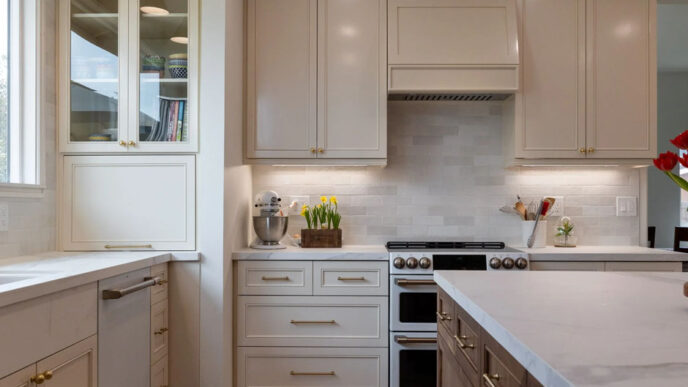
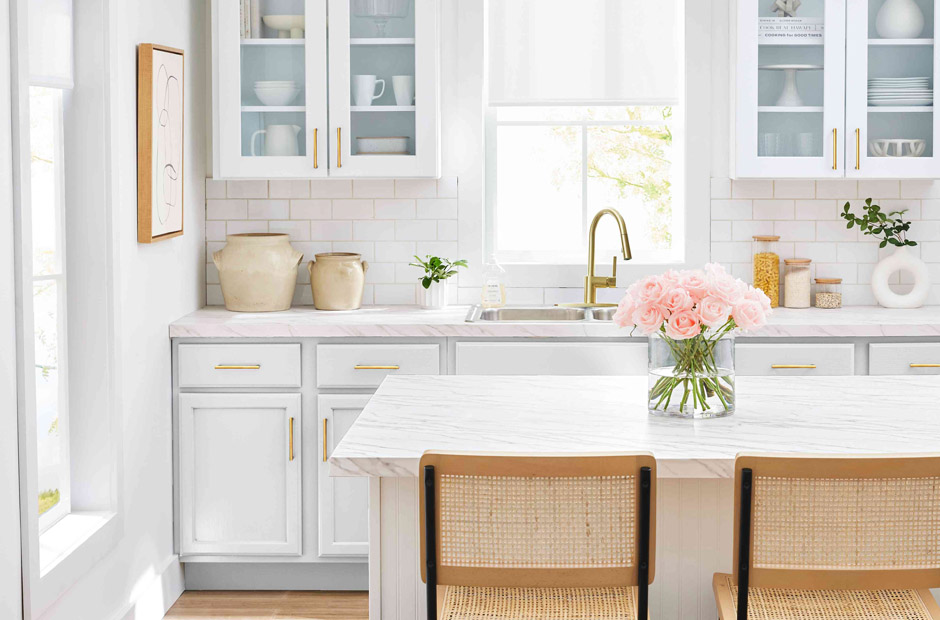
White Shaker cabinets remain one of the most adaptable choices for home design. Their clean lines and neutral color fit into nearly any aesthetic, from modern and minimal to rustic or coastal. They pair well with any design style because their simple design balances bold colors, natural textures, and varied finishes without clashing, notes BlackTree Property Management team.
This flexibility allows homeowners to create unique looks that reflect personal taste. Pair them with sleek metal hardware for a modern kitchen or mix them with warm wood accents to create a more classic or farmhouse feel. Their timeless shape makes it easy to update other design elements later without replacing the cabinets.
Every detail, from wall color to flooring, can shift the style of white Shaker cabinets in a new direction. With the right pairing strategies, they can serve as the steady backdrop for bright, bold statements or subtle, natural tones. That versatility keeps them a lasting favorite in both new builds and remodels.
Why White Shaker Cabinets Suit Any Design Style
Their clean lines, neutral color, and simple structure give homeowners flexibility in both new builds and remodels. They balance traditional craftsmanship with a modern look that allows easy coordination with colors, finishes, and decorative details.
Defining the Shaker Aesthetic: Clean Lines and Timeless Look
The Shaker style centers on simplicity and symmetry. Cabinet doors feature a flat center panel bordered by a subtle frame, creating a layout that feels structured but not ornate. This balanced look fits naturally into most interiors without overpowering other design features.
The bright finish on white shaker cabinets amplifies light, making smaller kitchens appear more open. Their neutral tone provides a blank base for countertops, walls, and flooring of nearly any color. The clean surface also makes maintenance easier, as smudges and splashes are more visible and can be wiped quickly.
Designers often describe the Shaker aesthetic as “quiet confidence.” The style avoids deep grooves and carved details, which can date a kitchen. Instead, it showcases balance, proportion, and function. Whether paired with wood floors or tile, this design retains a sense of calm consistency that appeals to both minimal and classic tastes.
Versatility in Modern, Farmhouse, and Transitional Spaces
Different décor styles highlight different features of Shaker cabinets. In modern kitchens, their crisp panels coordinate with flat surfaces, geometric tiles, and metal accents. Homeowners can add matte black handles or a monochromatic backsplash for a clean, updated impression.
In a farmhouse design, the same cabinets pair well with open shelves, apron sinks, and warm wood tones. The white color allows rustic details to stand out without creating visual clutter. In a transitional space, they connect modern finishes with traditional charm. Neutral paint colors, soft lighting, and simple trim create unity between both styles.
Because the Shaker profile avoids excessive decoration, it adapts easily to changing trends. Homeowners can modify hardware, wall paint, or fixtures over time without replacing the cabinetry itself. This flexibility supports both budget-conscious remodeling and long-term consistency.
Matching Cabinet Doors and Door Profiles for Unified Appeal
Consistency across cabinet doors defines a cohesive kitchen. Matching doors, drawer fronts, and side panels keep the look balanced. Even small adjustments, such as the width of the door frame or the thickness of the rails, affect the overall impression of the space.
A flat recessed center panel works best for homes that value simplicity. For a more classic effect, a slightly beveled door frame adds depth while maintaining the Shaker identity. Color tone also matters. Warm whites soften the atmosphere, while bright whites feel crisp and modern.
Hardware selection ties the space together. Brushed nickel or stainless steel accents coordinate with cooler paint finishes, while bronze or brass handles create warmth. Each combination builds character without overpowering the clean structure of the cabinets. Small choices in balance, proportion, and hardware design help maintain the unified appeal that defines Shaker cabinetry.
Design Strategies to Pair White Shaker Cabinets With Any Style
White Shaker kitchen cabinets work well in nearly every design style because of their clean lines and balanced look. Their versatility allows homeowners to adjust finishes, materials, and accents to match both modern and traditional interiors.
Choosing Hardware and Fixtures: Black, Brass, and Gold Options
Cabinet hardware defines much of a kitchen’s personality. Matte black hardware adds bold contrast against white Shaker doors, creating a clean and modern feel. It pairs well with gray quartz countertops or cool-toned backsplash tiles in a minimalist design.
For softer warmth, brass hardware introduces a subtle glow that fits both farmhouse and transitional kitchens. It works well beside warm wood floors or brass faucets. Gold hardware, used in moderation, gives a refined touch suitable for more classic or luxurious interiors.
Small fixtures such as drawer pulls, hinges, and knobs should align in finish to keep a consistent look. A mix of metals often feels unbalanced, so sticking with one tone across faucets, cabinet pulls, and even lighting creates harmony. Thoughtful use of hardware color can shift a kitchen from crisp modern to cozy traditional without replacing the cabinets.
Countertop Selections: Quartz, Marble, and Butcher Block Pairings
Countertops form one of the strongest visual links between cabinetry and overall kitchen aesthetics. Quartz countertops remain a top choice for their durability and consistent pattern. They offer subtle veining that complements white cabinets in both bright modern and Scandinavian-inspired spaces.
Marble countertops give an elegant, natural appeal that suits more classic or transitional kitchens. The soft gray veining ties nicely to neutral color palettes and white subway tile backsplashes. However, marble requires more care and regular sealing compared to quartz.
To bring warmth and texture, a butcher block countertop adds a handmade quality that suits farmhouse or cottage designs. Its natural wood grain balances the crisp tone of the cabinets. Some homeowners install butcher block only on a kitchen island for contrast, allowing durability on main counters with quartz or marble. This layered approach adds depth and practicality to the kitchen design.
Backsplashes and Wall Treatments for Visual Interest
Backsplashes play a large role in defining how white shaker kitchen cabinets interact with light and color. A white subway tile backsplash keeps the space bright and classic. It fits well in both modern and traditional settings without overwhelming the design.
Those who prefer more contrast may use textured ceramic, herringbone patterns, or vertically stacked tiles. These styles add depth without losing balance with the white cabinetry. Subtle grout colors such as soft gray or beige help break up large white surfaces while maintaining a calm mood.
For wall treatments, light neutral paint tones or gentle pastels guarantee harmony with white cabinetry. Matte finishes reduce glare and provide a soft backdrop for open shelving, decor, or placed artwork. This combination maintains simplicity while introducing texture and color variation that feels timeless.
Integrating Islands, Open Shelving, and Accent Cabinetry
A kitchen island serves as both a focal point and a design bridge between materials. Painting the island in a contrasting shade, such as soft gray, blue, or greige, gives the kitchen more depth while keeping the surrounding white shaker cabinets neutral. The island also presents a chance to use a different countertop, like warm butcher block or patterned quartz.
Open shelving offers an alternative to upper cabinets and helps create a lighter, more open feel. Wood shelves introduce texture and prevent a space from looking overly white. Arranging dishes, jars, and plants adds personal style without clutter.
Accent cabinetry, such as custom cabinets with glass fronts or decorative crown molding, can tie styles together. Small details on cabinet doors or frame edges adjust the look from sleek to traditional. In modern kitchens, slimmer frames maintain a clean line, while thicker Shaker frames provide classic appeal. Through these small yet deliberate choices, homeowners can achieve a balanced and cohesive kitchen design.
Conclusion
White Shaker cabinets give homeowners the flexibility to design kitchens that fit any style. Their clean lines and simple shape allow them to blend into both modern and traditional settings without losing character. This balance of classic form and neutral color keeps them popular across different trends.
For modern spaces, bold hardware or sleek countertops help create contrast and depth. In traditional kitchens, warm wood accents or soft lighting add comfort and charm. These cabinets adapt well to color changes, materials, and textures, making them suitable for varied preferences.
They also work well in homes of different sizes. Bright white surfaces make small spaces appear larger, while open shelves or glass inserts add interest without causing clutter. Each element can easily adjust to the homeowner’s taste.
In short, White Shaker cabinets remain a timeless option that fits evolving design styles. Their simple design, versatility, and neutral tone make them a lasting choice for any home.