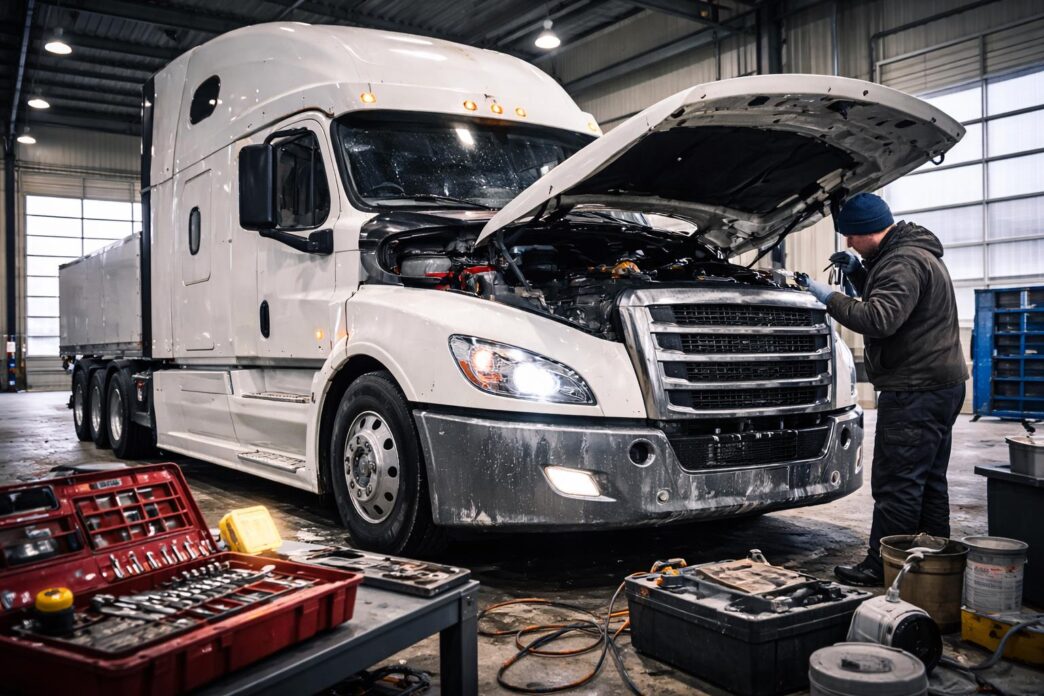
Holiday freight runs are brutal on trucks — especially the Freightliner Cascadia. Long hours, cold starts, heavier loads, and nonstop winter driving leave hidden wear behind that doesn’t always show up right away. By late winter, that accumulated stress begins to surface.
Once peak holiday hauling ends, late winter becomes the most important time to inspect, reset, and prevent breakdowns during the coldest remaining miles of the season.
Important note:
QSC Truck Parts sells aftermarket Freightliner Cascadia parts only.
No OEM or genuine manufacturer parts are offered.
This guide walks through the late-winter maintenance reset every Freightliner Cascadia owner should complete, with special attention to headlights and bumpers — the components that take the most abuse during winter hauling.
Quick Answer: What Should I Inspect on My Freightliner Cascadia After Holiday Hauling?
After holiday hauling, inspect your Freightliner Cascadia’s headlights, bumper, cooling system, electrical connections, suspension components, and air system. Winter stress often causes damage that isn’t immediately visible, and replacing worn components with reliable aftermarket parts in late winter helps prevent roadside failures before spring.
Freightliner Cascadia Headlights: Start With Visibility
Short daylight hours, snow glare, and road spray make lighting issues impossible to ignore late in the winter season. Many drivers don’t notice problems until visibility suddenly drops during night runs or storms.
Inspect your freightliner cascadia headlights for:
- Moisture or condensation inside the housing
- Flickering or delayed startup
- Yellowed or uneven light output
- Cracked lenses or loose mounts
High-quality aftermarket LED headlights remain one of the most common late-winter upgrades because they offer brighter output, faster cold-weather response, and better durability during extended night hauling.
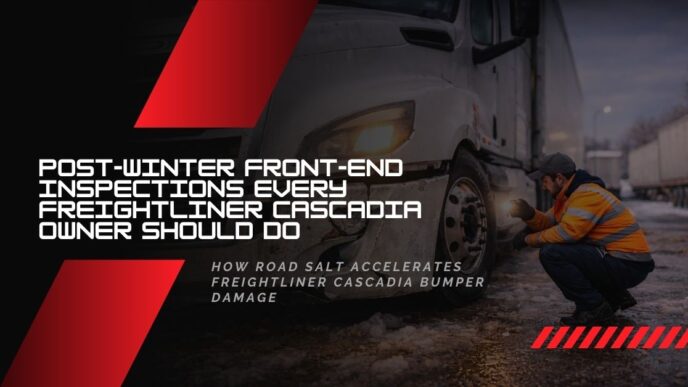
Freightliner Cascadia Bumper: Check for Hidden Winter Damage
Holiday routes and winter conditions increase exposure to ice chunks, road debris, and wildlife. Even minor impacts earlier in the season can weaken the front end.
Inspect your freightliner cascadia bumper for:
- Hairline cracks or rust
- Bent brackets from ice or debris
- Loose mounting points
- Misalignment affecting headlight aim
A compromised bumper doesn’t just affect appearance. It can shift headlight positioning, reduce front-end protection, and increase the risk of damage during late-winter driving.
Cooling System Stress After Repeated Cold Starts
Repeated cold starts throughout winter put continuous strain on cooling components. Late winter is when small weaknesses often turn into failures.
Inspect:
- Coolant levels and freeze protection
- Brittle or cracking hoses
- Thermostat responsiveness
- Radiator seepage
Addressing worn cooling components now helps prevent breakdowns during the final stretch of winter hauling.
Electrical System and Battery Weak Points
Late winter is when marginal electrical systems finally fail. Batteries that barely survived earlier winter conditions often won’t make it through the coldest remaining weeks.
Check:
- Battery voltage and terminals
- Corrosion on cables
- Ground connections
- Alternator output
Many winter roadside calls trace back to electrical issues that could have been caught with a short post-holiday inspection.
Suspension Components After Heavy Winter Loads
Holiday freight often means heavier loads and rougher roads. Suspension issues become more noticeable as freezing temperatures persist.
Inspect:
- Air bags for leaks
- Shocks for wear
- Height control valves
- Mounting hardware
Aftermarket suspension components are frequently replaced in late winter because cold temperatures expose leaks and worn seals quickly.
Brake and Air System Visual Checks
While full brake servicing should be handled professionally, a late-winter visual inspection remains critical.
Look for:
- Air line leaks
- Moisture buildup in air systems
- Uneven pad wear
- Warning lights or alerts
Frozen air lines and moisture-related issues continue to be a major cause of winter downtime late in the season.
Why Late Winter Is the Best Time to Use Aftermarket Freightliner Cascadia Parts
Late-season maintenance is about speed and availability, not waiting on dealership backorders.
Aftermarket Freightliner Cascadia parts offer:
- Faster shipping during winter emergencies
- Lower cost than OEM replacements
- Direct-fit compatibility
- Proven cold-weather performance
These advantages matter most when winter isn’t over yet and uptime is critical.
Frequently Asked Questions About Late-Winter Cascadia Maintenance
Does QSC Truck Parts sell OEM Freightliner parts?
No. QSC Truck Parts sells aftermarket Freightliner Cascadia parts only.
What Cascadia parts fail most often after holiday hauling?
Headlights, bumpers, batteries, cooling components, suspension air bags, and electrical connections are the most common late-winter failures.
Should I inspect my truck even if it’s running fine?
Yes. Many winter failures occur without warning and are often preventable with a post-holiday, late-season inspection.
Conclusion
Late winter isn’t a slowdown — it’s a reset window. Holiday hauling pushes Freightliner Cascadia trucks to their limits, and the damage doesn’t always appear immediately.
By inspecting critical systems like freightliner cascadia headlights and freightliner cascadia bumper, along with cooling, electrical, and suspension components — and replacing weak points with dependable aftermarket parts — drivers reduce downtime and avoid costly breakdowns before winter fully ends.
A strong late-winter maintenance reset keeps your Freightliner Cascadia reliable through the toughest remaining miles.