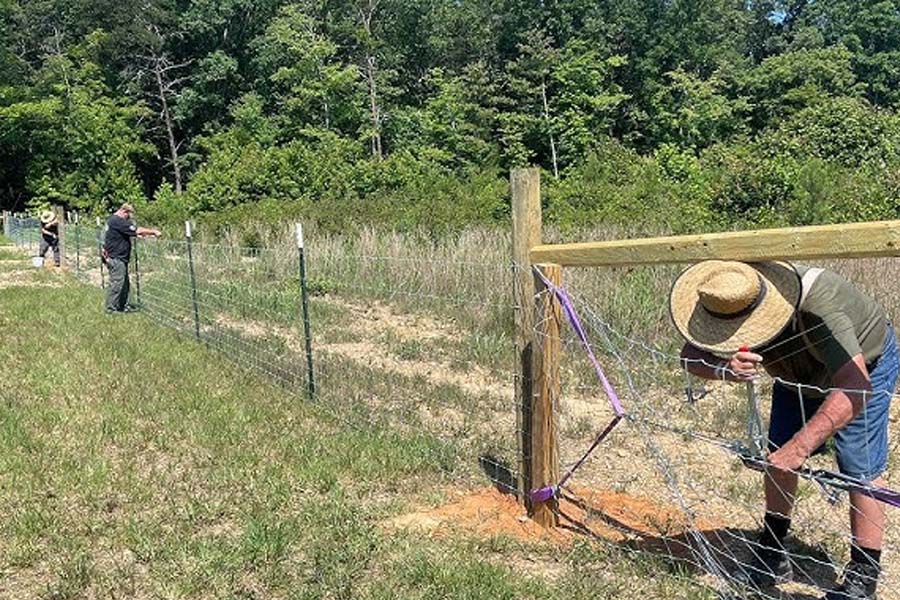
Fencing a hobby farm does not need large machines or complex tools. With the right approach, anyone can build a strong, tidy boundary that keeps animals safe and defines property lines. The simplest way to fence a hobby farm without heavy machinery uses practical materials and straightforward methods that save time, effort, and money.
This approach suits small farms that value hands-on work and cost-effective results. It focuses on easy-to-handle materials such as T-posts, pallets, wooden panels, and natural barriers. Each method allows a person to create a fence that fits their land, livestock, and budget while maintaining a clean, functional look.
Using T-posts with wire mesh for easy installation and durability
T-posts make fence building simple for small farms. They drive easily into the ground with a post driver, so no heavy machinery is needed. Steel posts resist rust and last for years, which saves money on replacements.
Wire mesh connects securely to the posts with clips or ties. This setup keeps animals safe while allowing clear visibility across paddocks. Property owners can adjust or repair sections without removing the whole fence.
Before setting posts, clearing brush or small branches with an easy-to-service petrol chainsaw helps create a clean line. Straight rows make the fence stronger and easier to tension.
Spacing posts about two to three metres apart gives enough support for most wire mesh. Tensioning the mesh by hand or with a simple come-along tool keeps it tight. As a result, the fence stays neat and functional for daily farm use.
Pallet fencing repurposed for quick, low-cost boundaries
Pallet fencing offers a simple and affordable way to mark out a hobby farm. Many people can find free or cheap pallets from local suppliers, which makes this method appealing for small projects. The materials already have a solid frame, so construction requires little cutting or shaping.
To build the fence, individuals can line up pallets side by side and secure them with posts or metal stakes. This setup creates a sturdy boundary that suits gardens, animal pens, or storage areas. It also reduces waste by giving used pallets a second purpose.
Pallet fences work well for temporary or semi-permanent boundaries. They provide enough height to keep small animals in or out while maintaining an open, rustic look. With a coat of paint or sealant, the fence can resist the weather and last longer without major maintenance.
Pre-built wooden panels fixed with basic hand tools
Pre-built wooden panels allow a small farm fence to go up quickly without heavy machinery. Each panel comes ready to attach, which saves time compared to building from single boards. The panels fit well for flat or gently sloped ground and suit most small rural properties.
A person can fix the panels using only a few hand tools. A level, hammer, tape measure, and screwdriver usually cover the job. The posts go into the ground first, then the panels attach with nails or screws. This process keeps the work simple and avoids the need for large power tools.
The panels can be stained or painted before or after installation to match nearby structures. They also provide a neat, uniform look that helps define boundaries. As a result, a small team or even one person can build a sturdy, tidy fence in a short amount of time.
Living willow barriers for a natural, self-sustaining fence
A living willow barrier suits small farms that want a natural fence without heavy machinery. It uses flexible willow rods planted close together so they root and grow into a woven wall. The result looks natural and blends well with the landscape.
This type of fence costs little to set up and supports soil stability. It also provides shelter for birds and small animals, adding to the farm’s biodiversity. As the willow grows, it strengthens the barrier each year.
Farmers can shape the structure by weaving new shoots into the frame or trimming them for other uses. Regular care keeps the fence tidy and encourages healthy growth.
Because willow grows quickly, the fence fills gaps faster than many hedge plants. It offers privacy and wind protection while staying alive and flexible. This makes it a practical and sustainable choice for a hobby farm boundary.
Woven wire fencing is installed manually for sheep or goats
A woven wire fence gives sheep and goats a safe boundary without the need for heavy machinery. It uses horizontal and vertical wires that create small openings, which stop animals from slipping through or getting stuck. This type of fence also resists pressure from animals leaning or pushing against it.
To install it by hand, farmers can set steel or wooden posts at regular intervals. They can then attach the woven wire with clips or staples, keeping the bottom tight to the ground to block predators. A tension bar or simple lever tool helps pull the wire straight without special machines.
This method suits small farms or uneven ground where equipment may not fit. It allows steady progress with only basic tools such as a post driver, pliers, and fencing staples. With careful setup and firm posts, the fence can last for many years and protect livestock effectively.
Conclusion
A simple fence for a hobby farm does not require heavy machinery or expensive equipment. With basic tools, anyone can set posts, attach wire or panels, and create a safe area for animals.
Affordable materials such as T-posts, pallets, or pre-built panels make the job faster and easier. These options also allow quick repairs or changes if the layout needs adjustment later.
Good planning saves time and effort. A clear fence line, level ground, and proper spacing between posts help the fence last longer and stay secure.
In the end, a well-built fence protects livestock, defines space, and adds value to the property. Simple methods and steady effort can achieve strong results without the need for heavy equipment.